
Choosing a hunting gun is essential for a successful hunt and for winning the battleground. If you are going hunting, you should know about the selection of a hunting gun and what should you check before choosing a hunting firearm.
An ideal hunting rifle may be a matter of accuracy, reliability, and the design of the barrel. Today, we will discuss some matters that concern a hunter before making a purchase decision.
Why Choosing The Right Hunting Firearm Is Important?
When selecting a hunting firearm, it’s important to consider safety features, protection abilities, accuracy, comfort, and aesthetics influenced by design and ruggedness.
The right firearm makes hunting safer, more effective, and more enjoyable.
You should match your gun to the game and the expected shooting range: a lightweight, fast-handling shotgun or bow for close, wooded birds; a longer, more accurate rifle for open-country deer.
Fit and comfort also matter. If the stock, weight, or recoil feel wrong, you won’t aim or follow through reliably. Look for reliable safety features, simple sights or optics you can use in low light, and ammo that’s available and appropriate for clean, ethical shots.
Finally, learn the local rules and practice often so you can make a quick, humane shot when it counts.
Different Types Of Hunting Firearms
There are many firearms that hunters use for hunting. The most common types of firearms for hunting are rifles, shotguns, and handguns.
Rifles
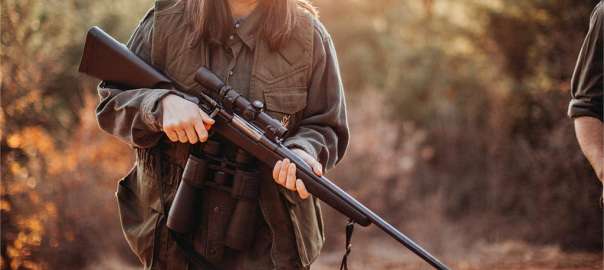
Rifles are the most popular type of hunting firearm. They are good for targeting the far-distance games and are ideal for hunting big game such as deer, elk, and moose. Rifles are long guns and are available in a number of varieties, including bolt-action, semi-automatic, and lever-action.
Bolt-action rifles are operated manually; these require the shooter to cycle the bolt after each shot. Rifle guns are known for accuracy in hunting and long-range shooting.
Semi-automatic rifles fire multiple rounds with one trigger pull and are for target shooting and self-defense. A lever that cycles the ammunition and is often used for hunting-operated lever-action rifles.
You may want to know: Can You Hunt Turkey With a Rifle?
Shotguns
Shotguns are another popular hunting firearm. They are perfect for hunting birds, rabbits, and other small game. They are also ideal for hunting in thick cover.
Hunters shoot birds or small game with the Shotgun. It’s either multiple pellets or a single slug. You can find several types of it, including pump action, semi-automatic, and double-barreled.
To operate a pump-action rifle, the shooter needs to cycle it manually. Semi-automatic shotguns can fire multiple rounds with a single trigger pull and are used by hunters for hunting and self-defense.
Double-barreled shotguns have two barrels and can fire two shots before being reloaded. Hunters and sport shooters commonly use it in hunting and sport shooting.
Handguns
Handguns are ideal for hunting in challenging spots such as blinds and tree stands, even for rare targets like rabbits, deer, and other small game.
Handguns are hunting rifles and are designed to be fired with one hand. There are basically two types of handguns, namely rifles and pistols.
The gun has an ammunition chamber and is semi-automatic. A revolver has multiple chambers that rotate to bring extra bullets into the shooting range. The guns have a reputation for being reliable and simple, although reloading them is typically slow.
What To Check Before Choosing A Hunting Firearm?
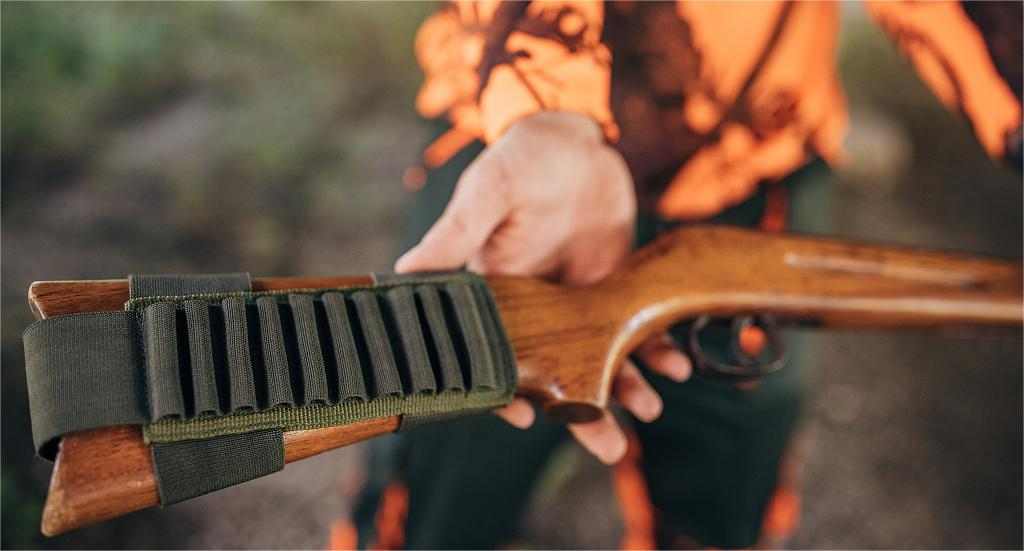
A practical choice of a hunting firearm must meet a few legal requirements, like caliber, gauge, or projectile energy. Your hunting firearm should be powerful enough to kill the game.
The type of ammunition that you use in your hunting expedition is always dependent on the variety of game. Each manufacturer usually recommends a particular kind of ammunition for each animal hunt.
Here we have jotted down some essentials to read before selecting a hunting firearm
1. Your Hunting Needs
The very first thing when you are looking for a hunting firearm is your hunting needs. Think about what type of game you are hunting for, the terrain, and the distance of your shots. These are all essential things you need to note down first before choosing a firearm.
2. Understanding Your Target Game
The first thing is to know the game you’re hunting. A successful job requires the right tools. Game animals vary in size, habits, strengths, and vulnerabilities. Your Hunting firearm choice should align with your target.
3. Caliber & Firearm Type
These include the status of the bullet and its core. The caliber is a bullet diameter size. In the case of a firearm type, this is known as the type of firearm you will be using. For instance, a rifle can be described as a long gun that is used to shoot one bullet, while a shotgun shoots many pellets.
4. Firepower Level
Another level of firepower has to be taken into account. Firepower level is defined as the amount of energy that a firearm delivers to an object.
A high firepower rating implies that the firearm has more significant kinetic potential to be delivered on a target, which might be an asset when pursuing big game.
5. Firearm Action
Reaction from firearms is another significant consideration. The gun action is the best equivalent, which shows how the gun loads and ejects cartridges. The common types of firearms action include: bolt actions, lever-action pump, and semi-automatic.
6. Legal Requirements & Regulations
Knowing the basic state laws is also necessary because they vary from one state to another.
Regarding the laws and regulations applicable to your state, to precisely define the specific scope of permissible weaponry, you must carefully consider both caliber and power specifications.
Furthermore, upon entering a hunting area, ensure that every decision you make is accurate and sound.
7. Optimizing Accuracy and Range
Considering the issue of accuracy and distance intercepting capability for a hunting gun. When you choose a rifle for hunting that has the capability of longer distances and hits, you will improve your prey success rate.
These are factors that can be considered since hunting has really grown into a preference not just for survival but also for fun.
8. Comfort and Fit
Comfort and fit have become fundamental aspects of finding a hunting gun because of the total number of choices. If you intend to grab a weapon before it can be fired, then its comfort should come first.
Both a comfortable and accurately fitted stock make for a more accurate shooting experience.
9. Optics & Sights
The main tools of high accuracy include the optics and sights. Varieties such as arrangement sights, red point horde, and iron sights improve viability.
Become familiar with these accessories to see what works best for your shooting needs. This helps ensure you have a great shooting experience.
10. Firearm Cost and Budget
A hunting Firearm cost is also an important matter to think about. Firearms can range in price from a few hundred dollars to thousands of dollars. It is important to set a budget and stick to it when choosing a firearm for hunting.
11. Experts Advice
It is always helpful to consult with experts when selecting a hunting firearm. Their intuition and learning, with plentiful experience, provide personalized counsel framing factors with game type, terrain, and preference.
Their knowledge is needed for the perfect fit of your weapon. You chose it with confidence, and it ensures fast success.
12. Safety Precautions & Maintenance
Safety precautions and maintenance are important factors to consider when choosing a firearm for hunting. It is essential to follow safety precautions and maintain your firearm properly to ensure that it is safe and reliable.
Final Thought
Finding your ideal hunting weapons is a call to the shot. Don’t worry about searching for a gun for your hunt. Choose the one that could fit you now, knowing there is a long way to go before finally selecting “The best hunting firearm”.
However, the right decision makes your experience rewarding, enriching it, and gives a positive outcome. Go through the factors that you should check when choosing a hunting firearm, such as requirements, quality, gun characteristics and features, firepower, legal issues, accuracy, level of comfort in use or shooting, optics used, the price tag attached to the purchase, and safety.
Each decision affects your trip. Opt for professional consultation, but foremost consider safety in availing of a pleasant experience. Look around, make your stand, and go into the field to hunt great game!

Leave a Reply