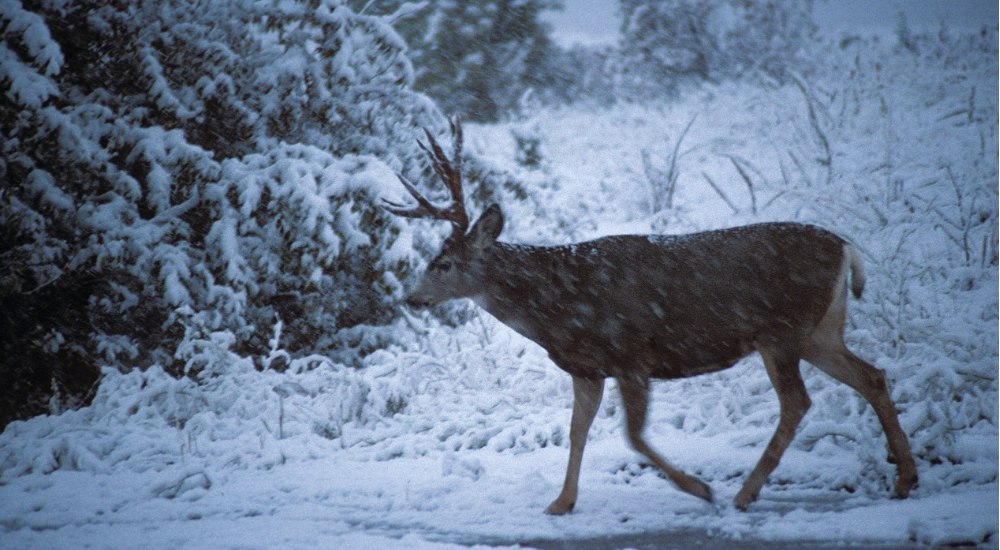
Deer tracking is not about the sharp eye; it is about knowledge, patience, and paying a lot of attention to detail. Being a hunter, wildlife enthusiast, or even a curious person, tracking a buck can be a fascinating method of analyzing the nature of the deer.
This guide is going to help us understand how to differentiate between buck tracks and doe tracks, the form of these deer hooves, and what the signs may represent, including the depth, stride, and drag marks. You will also learn terrain, tools, and weather factors for successful tracking in the field.
Basics of Deer Hoofprints
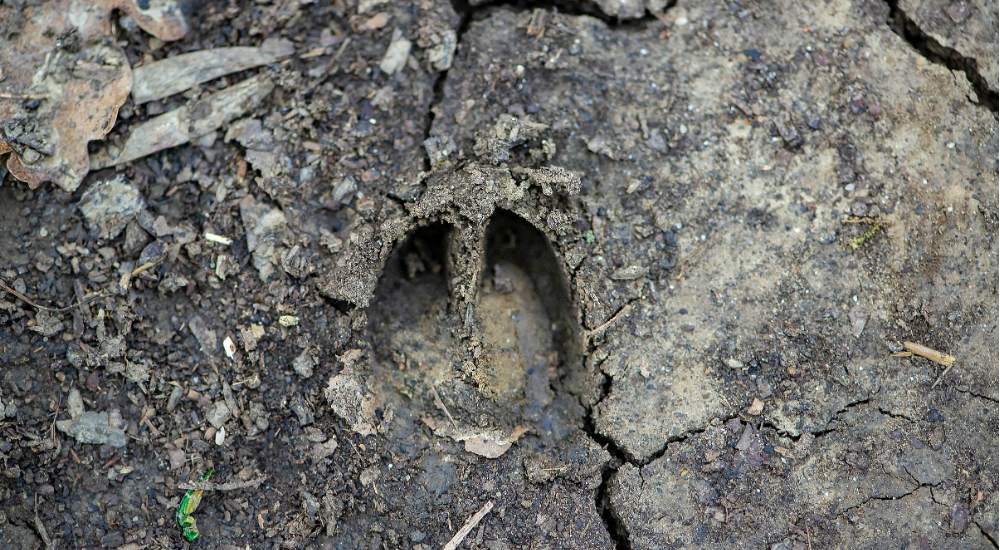
The deer hoofprints are important in order to know the size, sex, and direction of the animal. Deer are ungulates, which refers to the fact that they walk on hooves.
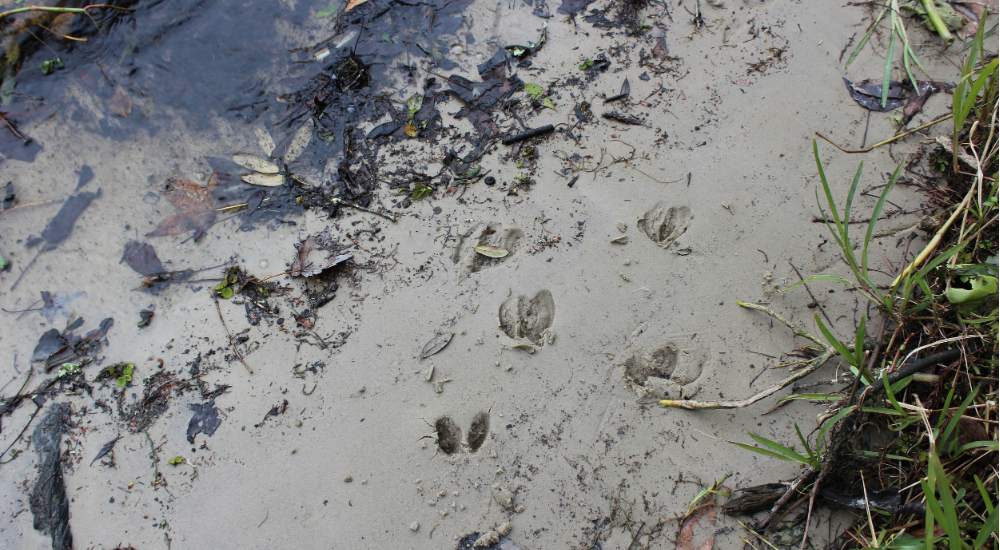
They have tracks which are cloven, which means each hoof has two distinct toes that create a split or heart-shaped appearance in soft ground.
What Does a Buck Track Look Like?
The size of the track is usually bigger and deeper than that of a doe because of the size and weight of the buck. Splayed toes are more likely to be found in buck-like tracks in soft or muddy ground. This splaying arises due to the fact that bucks have a lot of muscle mass and exert more pressure during walking.
In some cases, you may see the marks of dew claws or small footprints in their trail when the front feet are stepped on. They are more visible in soft snow or mud. This is more likely to suggest a heavier deer or running deer.
Types of Deer Hoofprint Shapes
The shape of deer hoofprints may change a bit according to the surface of the ground and the movement of the animal. The shapes of Deer Hoofprints can provide information regarding the kind of deer and its attitude.
The most common shapes to be found are:
- Heart-Shaped: This is the usual deer impression, which is formed by the sharp edges of the two toes.
- Rounded or Blunt Toes: This can be observed during the slow movement of the deer or even on hard surfaces.
- Splayed Tracks: The toes are capable of being splayed under pressure and are viewed in bucks or when a deer is running.
- Dew Claw Impressions: These are optional indicators depending on weight, speed, and ground type.
Front vs. Hind Deer Hoofprints
Front hoof prints of deer tend to be larger and rounder than the hind prints. This is because the front legs bear more weight than the hind legs.
On the other hand, hind prints are more pointed and somewhat narrower. You can sometimes also make a comparison of the front and hind prints, whether the deer is walking or running, or at a standstill.
The awareness of these differences would help keep track of the movement and behavior. Let’s understand this with the help of this table:
| Feature | Front Hoof Prints | Hind Hoof Prints |
| Size | Larger | Smaller |
| Shape | Rounder | Narrower and more pointed |
| Weight Distribution | Bear more body weight | Bear less weight |
| Depth | Usually deeper | Shallower |
| Purpose | Stabilization and support | Propulsion and movement |
Typical Dimensions of Deer Tracks
The most common length and width of the tracks of adult deer are 2-3 inches and 1.5-2.5 inches, respectively. Buck tracks tend to be on the larger end of this range, while doe tracks are usually smaller and more compact.
What Is The Walking Pattern Of Deer?
Deer move in a straight, purposeful direction, and such a movement is usually called a direct register. This implies that the hind feet will land at the same point or at least very near, as the front feet landed.
It also helps the deer save energy and sound, especially in regions where there are leaves or snow. This speed is a straight and solitary track of deer that is in motion without noise.
When that pattern is either staggered, broad, or erratic, it can indicate one or more of the following: the deer was alert or spooked, was working in sloping terrain, or was even injured.
During the rut, however, bucks are more apt to strike longer hoof marks, space the hoof marks farther apart, and scratch with their horns upon the ground.
With attentive observation of the distance between tracks, stride, direction, and position, the size, speed, and even mood of the deer can be estimated.
A thin, solid line is mostly an indelicate deer or fawn, but the heavier bucks will have a larger trail with a wider interval. The jagged or zigzag track will tell that the animal was grazing, pacing, or attempting to escape the grip of a predator.
Being in a position to pick up on these slight differences can make a huge difference in your accuracy in the field.
Buck vs. Doe Tracks
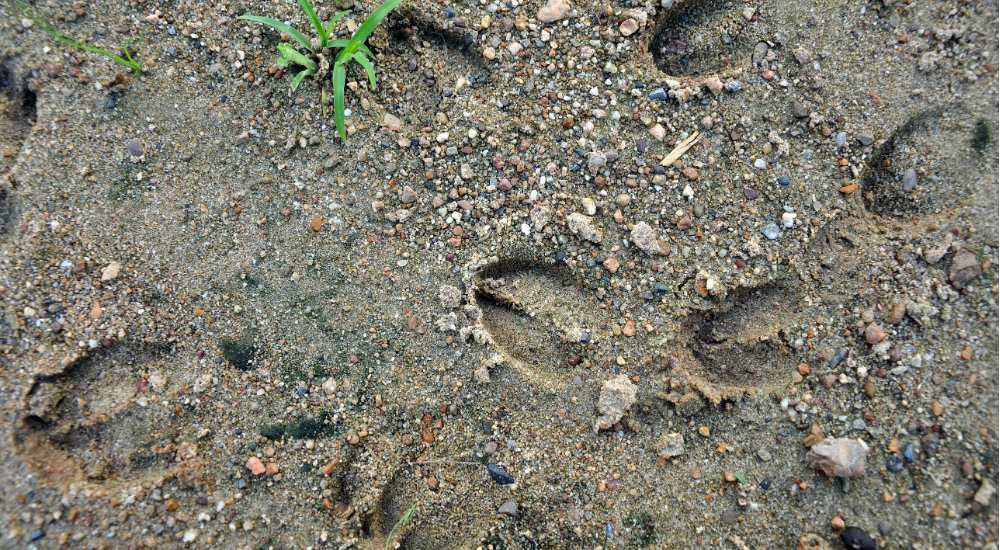
The most popular objective of finding deer footprints is to find out whether the path is left behind by a buck or a doe.
Though buck and doe tracks may seem quite similar. It is to be remembered, though, that these differences are not necessarily absolute, especially where terrain, size, and moving habits of deer are factors.
Differences Between Buck and Doe Tracks
At first glance, buck and doe tracks may seem to be very similar. They both are of the same shape of cloven-hoof, with two sharp toes in the shape of a heart or forked print. However, some clues can be given by a few tendencies.
In most cases, the buck tracks are bigger and deeper compared to the doe tracks. This is based on the fact that bucks are heavier and more muscular in their build, particularly during the rutting season. The added weight can cause their hooves to spread even wider when it is damp, like in mud or snow.
Spacing between toes can also provide information. Bucks are more wide-footed, and this may mean that the left and right tracks are a little spaced apart. On the contrary, it usually leaves narrower, separated prints as they are lighter and more compact in structure.
How to Tell If a Deer Track Is a Buck or Doe?
It may not have a perfect formula; however, a mix of indicators can raise the likelihood of discerning the ownership of a track by a buck or a doe. The following are some of the signs to watch out for:
- Track Size: Tracks of greater than 3 inches long and wide may be of a mature buck. Whereas smaller tracks, probably of a doe or young deer.
- Track Depth and Splaying: In soft ground, deep prints and splayed toes (the ends of the hooves spread out) can be an indication of a buck.
- Stride and Gait: The deer will stride much more, leaving numerous tracks of the dragged or scuffed foot, particularly in snow. They are direct, and their activities are linear.
- Trail Patterns: The normal pattern of the bucks is individual, especially during the non-breeding season. A track of one of the lines can be a buck. Fawns and does, however, move in small groups. As a result, their prints are usually numerous and overlapping.
- Dew Claw Marks: These dew claw marks would not occur in bucks, but would more likely occur in the track of a buck, due to the weight and stride.
None of these attributes alone can guarantee the sex of the deer, but when combined, they can provide a more accurate approximation.
What Are Some Common Mistakes About Deer Tracks?
Through the years, hunters and trackers have come up with a number of beliefs that are shared concerning the identification of deer through their tracks. Some of these beliefs are:
- “Big print equals big buck”: This is not a rule altogether, though sometimes it may be true. A fine doe leaves a track nearly as broad as a young buck.
- “Single trail means buck”: Bucks are more individual, at any rate, unless in the rut, and one trail may be a buck. Does and fawns tend to go in company, with prints close together.
- “Drag marks mean buck”: The bucks drag their hoofs, or even antlers, through the snow, or soft dirt, when tired, or in the rut.
- “Wider stance equals buck”: Bucks have broader chests and tend to have a wider gait, which may translate into the spacing of tracks.
These are beneficial ideas, and they do not always hold. The variables that can affect track appearance include the age of the deer, the type of ground, speed, and conditions.
Learn to Read Deer Tracks Effectively
The fact is, these signs may be used to guide you in the right direction, but they are not infallible. A big doe on muddy ground can make an impression that would be very nearly that of a small buck. Also, an angle walk or one across rough places may give buck tracks that look uneven or narrow.
It is also important to consider the terrain. Even a big buck can leave little or insignificant tracks in such hard, dry soil. On the contrary, snow conceals the size and depth of tracks, making it difficult to determine them correctly.
To that extent, with time, experienced trackers learn to incorporate several indicators together. Such as track size, track depth, stride, gait, and other signs around, to construct a credible interpretation. This combination of observation and practice brings about assured identification.
Reading Deer Tracks in Snow and Mud
Deer tracking in snow or mud can be more informative than on a dry surface. But it has its challenges as well. Both snow and mud take more detail, and you can learn the size, depth, and stride of the movement of the deer.
It is normal to find Buck tracks larger and deeper because they have more body weight. In mud, the hooves can be more spread out. And in snow, the depth and spacing of the prints can be enhanced.
Drag marks are also one of the common signs of a buck in snow. Bucks have the habit of dragging their hooves a little when they walk, and as a result, there are shallow lines between or behind the prints.
This is particularly in the rut when they are exhausted or moving less cautiously. Dew claw impressions can be found in the back of the main prints in mud, which suggests a buck is heavier.
What Will the Tracks Tell You?
Tracks can reveal more than just direction and species.
The weight of an animal can be determined by the depth of a print. This can be used to differentiate between a mature buck and a lighter doe.
Stride length and track spacing can be used to give an indication of the speed and mood of the deer. Larger steps may be a sign that the deer is alert or moving quickly.
But short and close-set prints will show that the deer is moving slowly and with caution.
Other Tracking Signs to Look For
Other than footprints, experienced trackers also examine tree rubs.
Bucks create mock scrapes to leave their scent and droppings, signaling their recent activity. Signs like broken branches, disturbed foliage, and hair caught in tree bark are also important clues.
You can even observe the body prints of a deer that lay down in the snow. Putting all these clues together, one can get a better idea of the deer’s movement and orientation.
Deer Tracking Techniques and Tools
Deer tracking is more than just following some footsteps, as it is a skill that requires more facets. It is about strategy, observation, and the tool.
It would be important to know how deer behave, especially at various times of the day and in different seasons, for the right tracking.
Common Mistakes Beginners Will Make
One of the most common mistakes made is to hurry the process. Amateurs are in a hurry. They overlook the signs, and they make a noise that scares the deer.
The other mistake is paying attention only to tracks but not to other signs such as broken twigs, rubbed trees, or scat.
The only way to prevent these mistakes is to go slowly, remain silent, and scan the surrounding environment. The wind direction should also be considered, as the deer can smell well, and they will run away when they sense your scent.
Keep in mind that deer behavior is seasonal. During the rut, the bucks are much more active and leave more evidence. Tracks can be made more identifiable through snow or rain, and they can be made more difficult to trace over time. It is always necessary to make adjustments to the current weather situation.
Tips for Tracking Wounded Deer
The greatest skill and patience are needed to track a live deer. Look for fresh tracks, broken twigs, and disturbed leaves.
Look at the stride line of movement. Even a smooth, straight track is good evidence of a calm deer. Look ahead with the help of binoculars.
In the case of an injured deer, search the ground for drops of blood, drag marks, or irregular and uneven deer tracks. Mark the blood trails by use of either tape or natural signs to avoid losing the trail. The wounded deer falls downward, or towards water.
Move slowly, avoid pressure, and give the animal time if needed. Always approach carefully to avoid spooking a still-alive, injured deer.
Useful Tools for Tracking
Modern tracking tools can improve your success.
- GPS Mapping App– Helps mark trails, track movement, and navigate back to key locations.
- Binoculars– Allow you to observe deer or signs from a distance without disturbing the area.
- Trail Camera– Monitors deer activity over time and identifies frequent travel routes. Learn more about how to set up your trail camera.
- Flashlight or Headlamp– Essential for tracking in low light, especially when following blood trails. Here are some tested and recommended headlamps for hunting.
- Flagging Tape or Markers– Used to mark tracks or blood trails without disturbing the environment.
- Notebook or Tracking App– Records weather, track details, time, and movement patterns for future reference.
Safety Tips
- Wear Blaze Orange or Bright Clothing– In hunting season, visibility prevents accidents from other hunters.
- Inform Someone of Your Plans– Share your location, expected return time, and route. Read another post to learn more about how to make your hunting plan.
- Check Weather Forecasts– Sudden weather changes can create dangerous conditions or make tracking harder.
- Stay Aware of Surroundings– Watch for wild animals, unstable terrain, and hidden obstacles.
- Carry a Fully Charged Phone or GPS Device– Helps with navigation and emergency communication.
- Pack Basic First Aid and Emergency Gear– Include water, snacks, a map, and a flashlight.
Conclusion
Buck vs. doe tracking is a lot about observation, patience, and practice. Whether the form of the hoofprints or the interpretation of the marks in the snow or the mud, it is all important.
You can increase your tracking success by ensuring that you use the right tools, avoiding beginner mistakes, and adjusting to the changing seasons.
Deer hunting, whether live deer or a wounded trail of the deer, a combination of knowledge and field experience will make you a more solidly developed hunter. You will learn to interpret the woods as a written story with tracks.
Leave a Reply