
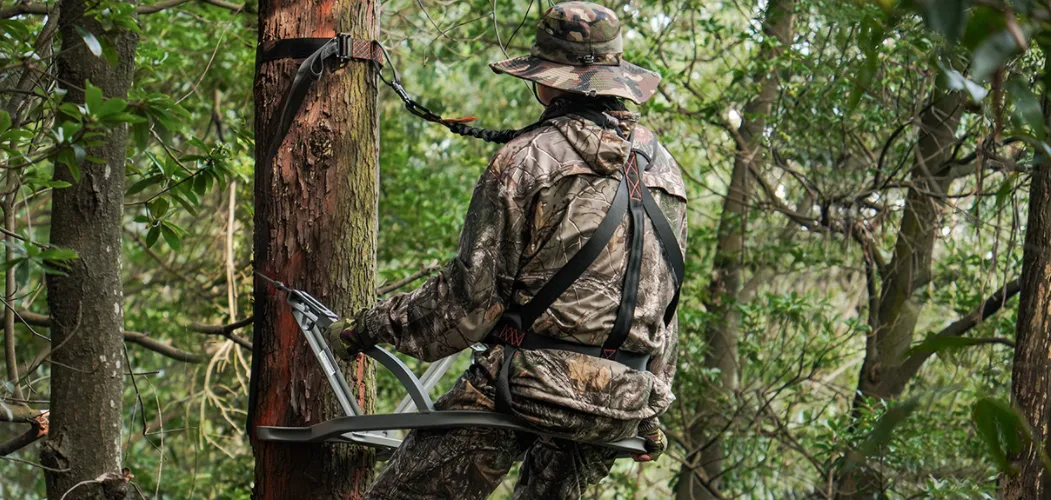
A lot of people ask whether it is legal, safe, and even ethical to hunt from a stand that someone has installed.
There are usually questions when hunters come across other tree stands that are not theirs, particularly on public lands. The answer can not be easy, as laws are different in the states, and the opinions of hunters are really different.
Knowing these points of view, hunting ethics, and safety can help make the woods respectful and legal. Now, let’s discuss whether you can hunt in that way and how other hunters think about it.
Tree Stand Laws By States
Tree Stand Rules on Public Lands
In America, tree stand hunting is regulated by each state wildlife agency. Most states have limitations on the use of public land in order to provide equal opportunities, safety, and management of the resources.
An example is that the states of Minnesota and Iowa have opened tree stands to be used by hunters, but they do not permit them to be left overnight.
This regulation does not allow individuals to make claims of having permanent hunting areas in places that should be used collectively.
In other states like Wisconsin, it is permissible to leave the tree stands on the government land, but they have to be labeled with the name and address of the hunter or a special Department of Natural Resources (DNR) identifying number. The requirement assists the wardens in determining the owner in case there is a conflict.
At the same time, Missouri requires the stands left on conservation sites to contain personal information and should be taken down at the conclusion of the hunting season.
There are also states where the location of stands is controlled. Indicatively, to illustrate this restriction, Michigan does not allow a hunter to set up a stand within 100 yards of another stand existing in the public lands. This regulation decreases the number of conflicts and congestion in the premier hunting areas.
In the meantime, Illinois allows portable structures during the season, but no permanent buildings on publicly owned land.
Tree Stand Laws on Private Lands
The rules governing privately owned land are normally lax since the owner of the land has a say.
Most states permit permanent stands to be constructed by the hunter who can have them all year round or share them with their friends and family. Nonetheless, intrusion is an important issue.
When a hunter occupies a tree stand without the direct consent of a landowner, this is regarded as trespassing, which may attract legal punishment.
In other states, such as Texas, a written consent of the owners of land is a prerequisite to the hunting process, including the use of tree stands.
Essentially, regulations on the use of tree stands on publicly controlled lands are tougher and are designed to safeguard equity. Whereas the rules that control the use of land in private territory uphold the rights of the land owner.
How Do Hunters Think About This Experience?
Perspectives on Using Others’ Tree Stands
”Ethical is 50/50. Ethics isn’t what would prevent me from using another person’s stand. Safety would. You’ve got no idea if the straps have rotted, been chewed etc or if the stand is falling apart. That alone is enough for me to hunt off the ground if that was my only option.”
”I don’t think using it is necessarily unethical but moving/adjusting/taking is unethical. That said I have never used one and probably never will.”
”It’s generally legal to leave them up in mine (although it varies by location), but the law also explicitly states that if you do leave them up they’re first-come, first-served. I’m still not sure I’d want to have that argument with an armed person who thinks they saved their spot on opening day, though. Ethical or not, I steer clear of them just to avoid the potential conflict. I also expect that an area with a stand is definitely being hunted, so that’s another reason to avoid it if possible.”
”I’m not sure about the ethicalness of using it, but I know a lot of people would give you an ear full if they came out there and someone else was on it, despite it being on public land. And in my state it’s not even legal to leave one out there.”
”If the spot is unoccupied when you get there, you can 1,000% hunt that spot. Hunting out of the actual stand… I probably wouldn’t do for safety reasons, but might also not do because I don’t want to have the conversation with the person who set it up if they happen to walk in while I’m in it.”
Most hunters tend to have a stiff position on whether it is right or wrong to use the tree stand of another person. It has been argued that when one identifies an empty stand, it does not necessarily imply that one is allowed to occupy it.
They consider tree stand hunting very personal, and it entails preparation, scouting, and planning. It may be like stealing the position of another hunter.
Besides, it is not safe to use others’ stands because you don’t know when or how it was set up. You may never trust the gear that is not checked and set up on your own.
”This is how I feel about it as an exclusively public land hunter: if i leave a stand in the woods and someone is in it, i can’t get too bent out of shape, because i am the one who left it. That being said, i never hunt another person’s stand, simply out of respect…”
”I wouldn’t mind if somebody wanted to use my stand. If I showed up and they were in it, I’d ask them to leave so I could use it, but it isn’t a big deal either way.”
”Personally, if someone uses my stand when I’m not around and has a better hunt because of it I’m happy for them. The key to me is USE not ABUSE. But I understand that is not “the way of things” to most.”
”I’ve walked in and found people in my stands a couple times. I don’t get mad. Just go on to the next spot. It’s public ground. Certainly not worth making enemies over.”
”Look at your states laws. But as far as I’m concerned it’s public property and have sat in them before.”
Conversely, other hunters hold the view that there is nothing that is privately owned, even in public land. Given the fact that laws do not allow anyone to make long-term claims over a particular territory, a tree stand that is not actively maintained would be considered good prey by others. Nevertheless, even supporters of this view often advise against the practice with respect.
How Should We Handle It In The Field?
When hunters meet somebody who is using their stand, they react differently.
Other hunters can be polite in their explanation. They can also request the individual to move away. Others can either walk away and completely avoid confrontation.
The conversations indicate that most hunters do not want to make issues bigger in the woods, especially when talking to someone with weapons, because hunting safety must always come first.
The most common tradeoff is that hunters negotiate before the season. When a hunter visits one area repeatedly and sets up stands, other hunters can choose not to go to that place or hunt elsewhere.
Accidents can be avoided by understanding and respect in the hunting fraternity through communication.
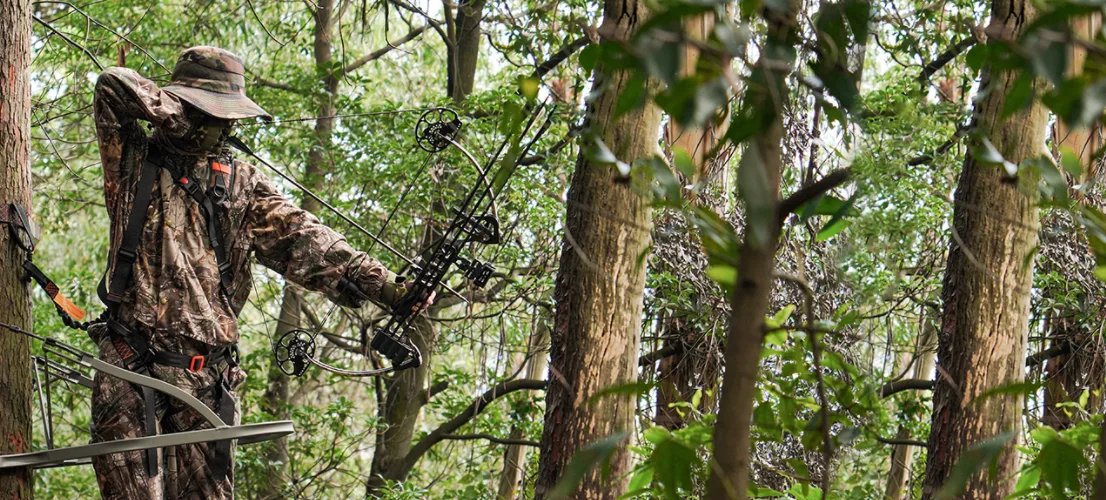
Is It Ethical to Use Another Person’s Hunting Stand?
Ethically, most hunters feel offended by the use of others’ stands since it is against the unspoken hunting etiquette. A stand symbolizes not only equipment but also time of scouting, preparation, and money.
Its illegal use devastates the work of the individual who had deposited it there. Furthermore, entering the position of a stranger is unnecessary and can lead to conflict during hunting hours.
Some hunters think otherwise, especially in the case of public land. According to them, the practice of not visiting a stand for weeks or months is somehow trying to claim the public space, which is against the concept of equal access.
In their case, sitting in a vacant stand would be no better than sitting against a tree in the same position. These are their arguments; once one stand has been abandoned, it ceases to be a personal claim.
The ethical dilemma is usually reduced to weighing between respect and legality. Although this law may allow one to occupy an unattended stand, most hunters do not do this because it is polite.
Ethical hunting activities go beyond what is required by law and center on preserving the community trust, fairness, and long-term enjoyment of the hunting traditions.
Things To Know If Hunting From Others’ Stands
Understanding Ownership
Even in publicly owned land where a tree stand may be abandoned overnight, the original owner is responsible. Such a stand might be prone to liability.
In case the stand is broken or insecure, the user will take the risk. Hunters must therefore be careful when considering the condition of any stand that they meet.
Avoiding Conflicts
Prevention of conflict is a necessity. Even when the law allows it, hunters are not supposed to be in direct proximity to the stand of the other individual. They are also supposed to be considerate of early arrivals.
When a person is already hunting in a stand, it is respectful to vacate the area. Conflicts can be avoided by just using the simple rule of doing to others what you would like done to you.
Practical Advice
Hunters who find another stand must not use it unless they are aware of the owner and are authorized to use it. Instead, they can go hunting in the vicinity, avoiding interfering with the line of vision of the original hunter.
The use of portable stands or climbing sticks makes a person independent and eliminates possible conflict.
How To Ensure a Safe Hunt on Public Land?
Setting Up Your Own Stand
These lightweight, portable stands are easy to assemble and should be used by hunters who favor individualism. Climbing stands, hang-on stands, and ladder stands will all be possible.
Most states have regulations that hunters pull stands down at the end of the day; therefore, portability is a viable solution. Surveying the site in advance can be useful in the identification of trees that offer secure and strategic positions.
Away From Existing Stands
Hunters are advised to maintain a respectable distance when in a place that has pre-existing stands. Placing very closely will provide a shooting lane overlap and has the possibility of accidents.
Normally, it offers a safe distance of at least 200 yards, but it may differ depending on local laws.
Key Safety Tips To Follow
The safety of hunting is not to be compromised. A full-body safety harness should be used by hunters each time they are in a tree stand or sitting on a tree stand.
Most of the injuries during hunting are related to falls, which usually happen either up the ladder or down the ladder.
Also, hunters must check their stands frequently to find out that bolts are rusted, the straps are torn, or the platforms are unsteady.
The other important safety technique is to have three points of contact when stepping on a ladder or the steps. Hunt lines are also to be used where firearms or bows are raised by hunters rather than being carried up the ladder.
Lastly, notifying a friend or relative of hunting spots and the time back home will give further protection in case of an emergency.
Conclusion
Public land tree stands hunting is a very complicated issue of law, ethics, and safety. Although it is not necessarily a crime to appropriate another person’s stand, it usually goes against the etiquette of hunting and causes unnecessary tensions.
They advise hunters to bring their own gear and take the time to appreciate the efforts of others, and most importantly, to be safe. With proper ethical and safe hunting, the public lands will be easy for everyone.


Leave a Reply