
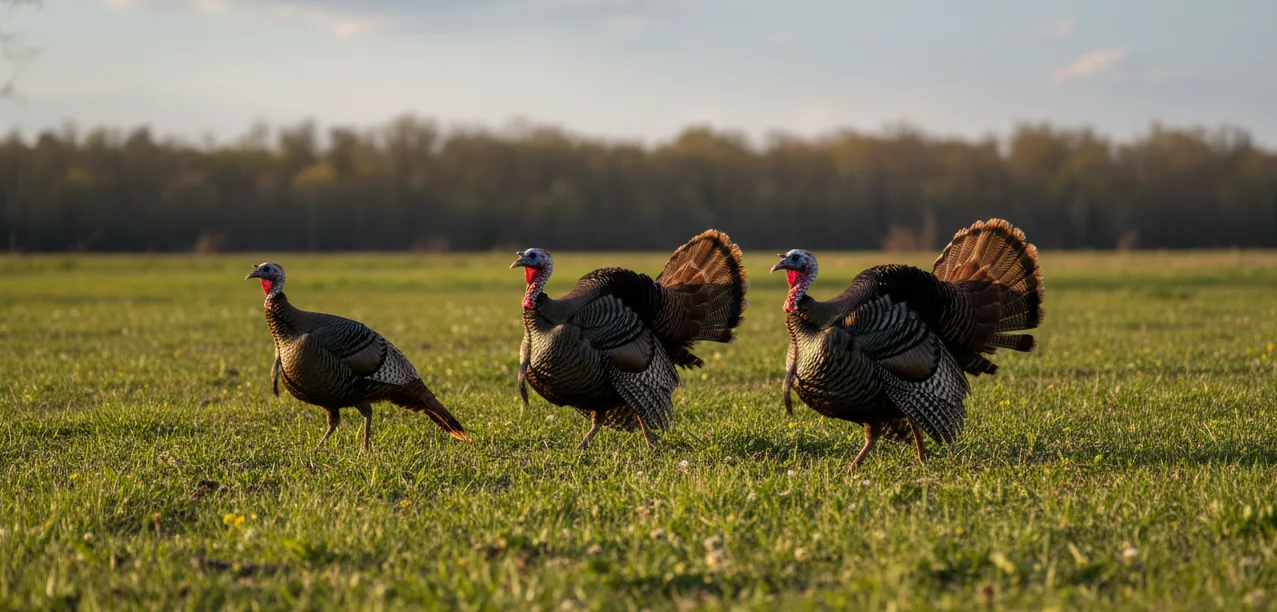
Spring turkey hunting is frustrating until you figure out what’s actually happening. You hear gobbling, get excited, set up perfectly, and then nothing shows up. Or a tom gobbles for an hour straight but never moves.
In our guide, we break down the real problems you’ll face in spring and what actually works to solve them. No fluff, no theory that sounds good but fails in the field. Just practical tactics that hold up when you’re out there wondering why turkeys are the way they are.
Understanding Spring Turkey Behavior
Spring gobblers are basically walking hormones. The whole season revolves around breeding, and that fact alone explains about 90% of the weird stuff they do.
Here’s what confuses a hunter sometimes: positioning, calling, waiting, and nothing happens. A turkey gobbling its head off doesn’t mean it’s interested in coming to you. It’s counterintuitive.
He’s actually announcing his location to hens. Because in the actual turkey world, that’s how it works. Hens go to gobblers, not the other way around.
Breeding also makes gobblers way less predictable than you’d think. Early in the season, when they’re fired up, and hens aren’t quite ready yet, gobblers might actually come running to calling.
But once hens are receptive, those same gobblers will ignore your best calls because the real hens literally surround them. Your decoy setup could be perfect, your calling could sound exactly like a hen, and it doesn’t matter because he’s got actual hens right there.
This is why “calling louder” rarely works in spring. Loud calling tells a gobbler you’re super interested, but it also tells him exactly where you are.
Plus, real hens don’t usually scream across the woods. They cluck, purr, and yelp at reasonable volumes. Going louder just sounds desperate and weird.
Early vs Peak vs Late Spring Tactics Changes
Spring turkey season isn’t one long, identical stretch. It changes week by week, sometimes day by day, and your tactics need to change with it.
1. Early Spring
Early spring is when gobblers are most aggressive. The breeding season is just starting, hens aren’t fully receptive yet, and toms are competing hard for dominance. This is when you’ll hear the most gobbling and see the most strutting.
Should you use aggressive calling? Sometimes. If you hear two gobblers going at it, aggressive yelps and cuts can fire them up even more. Competition is high, and they might come in hot to challenge what they think is another tom moving in on a hen.
But here’s where people mess up: they assume aggressiveness always works in early spring. It doesn’t. If a gobbler is alone on the roost and you hit him with aggressive calling, he might just gobble back and wait. He’s not competing with anyone, so why rush?
When hunting turkeys in early spring, the biggest mistake is moving too fast on roosted birds. You might hear a tom turkey gobbling at first light and rush in to set up close. Doing so could spook him off the roost, or spook a hen turkey nearby. Turkeys will fly off in another direction because you didn’t give them enough time to settle down.
A better approach is to locate a turkey roost, set up at a reasonable distance (100 to 150 yards is usually good), and wait for him to fly down naturally. Then start your calling sequence. Patience in early spring beats aggression almost every time.
2. Peak Breeding
Peak breeding is when everything gets frustrating. This is usually mid to late season, and it’s when hens are actively breeding. Which means gobblers are henned up.
A henned up gobbler is the most annoying thing in spring hunting. He’ll gobble, you’ll call, he’ll gobble again, and then…silence. Or worse, he gobbles for 20 minutes straight but never moves an inch in your direction.
Why? Because he’s got hens with him, and those hens have zero interest in walking toward your calling. They’re already with a tom. Mission accomplished for them.
And here’s the kicker: sometimes gobblers stop responding even though they’re close by. You think they left. They didn’t. They just shut up because the hen they’re with doesn’t like all the noise. Or because they’ve already bred and they’re just resting.
The best strategy during peak breeding is simple but hard to execute: set up, wait, and let the hens work as bait. Find where gobblers are going with their hens. Get there first. Set up in a good spot. Call softly, just enough to let any nearby birds know you’re around. Then wait.
Eventually, hens will wander. They’ll feed, they’ll move to a new spot, and sometimes they’ll actually come investigate your calls out of curiosity or territoriality. When the hens move, the gobbler follows. That’s when you get your shot.
It’s boring. It requires sitting still for hours. But it works better than running around the woods trying to pull a gobbler away from live hens.
3. Late Spring
Late season gets written off by a lot of hunters, but it’s actually pretty good if you adjust your approach.
Gobblers are still active, but they’re quieter. Most hens are bred and sit on nests. That means toms are back to being solo or in small groups, and they’re less vocal because the urgent part of breeding is over. They’re not screaming their location anymore because there’s less competition.
This is when mid-day hunts become productive. Early mornings might be dead quiet. But from 10 a.m. to 2 p.m., gobblers start moving, looking for any hens that might be available for a second round of breeding. They’re covering ground, checking old spots, and being opportunistic.
Instead of relying on calling, late spring is about scouting and ambushing. Find feeding areas, strut zones, and travel corridors. Set up there. Call minimally. Let them come across you naturally.
A few soft yelps to get their attention if they’re nearby, but don’t try to pull them from a distance. They’re not in the mood to run to calling anymore.
Think of late season like hunting pressured birds. Because by this point, they are pressured. They’ve heard calls, they’ve seen hunters, they’ve learned. So you hunt them like the educated birds they’ve become.
How to Deal with Hung-Up Gobblers?
A hung-up turkey responds to your calls, clearly knows you’re there, but refuses to close the distance. He just stops at some invisible line and waits.
There are two types of hang-ups: terrain and psychological.
Terrain hang-ups are physical. There’s a creek he doesn’t want to cross. A fence. A thick patch of brush. An open field he’s nervous about walking into. These are fixable if you know the land. You reposition to eliminate the obstacle, or you set up on his side of it next time.
Psychological hang-ups are trickier. The gobbler just doesn’t feel right about the situation. Maybe your call sounds off, the setup looks wrong, or he’s been called to before, and it ended badly. Whatever the reason, he’s not buying what you’re selling.
Here are five ways to break a hung-up bird:
1. Change location
Sometimes you just need to move. If he’s hung up at 80 yards and won’t budge, circle and approach from a different angle. This works especially well if terrain was the issue.
2. Go silent
Stop calling completely. This drives gobblers crazy sometimes. They heard you, they know you’re there, and now you’ve gone quiet. Curiosity gets the better of them. They’ll either come looking or they’ll leave, but at least you’ll know.
3. Soft hen talk only
Ditch the yelps. Just do soft clucks and purrs. Sounds like a feeding hen that’s not interested in him. It’s less threatening, and sometimes that’s all it takes.
4. Use terrain to force movement
If you can position yourself so that he has to move to see where you are, do it. Get behind a rise, a bend, a tree line. Make him commit to moving if he wants to locate you.
5. Strategic walking away
This sounds backwards, but sometimes walking away (while making leaves-crunching sounds like a hen leaving) triggers a gobbler to follow. He thinks he’s about to lose his chance, and he’ll close the distance. Doesn’t always work, but when it does, it’s magic.
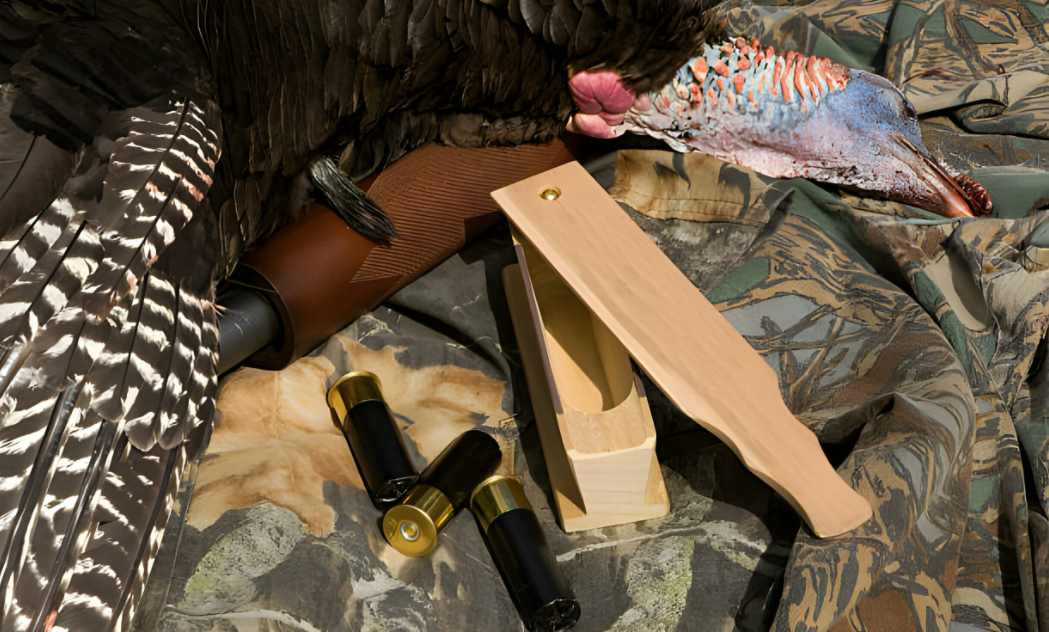
Spring Calling Strategy: Less Is More
Overcalling kills more spring hunts than bad setups. Not even close. You can set up in a mediocre spot with great calling discipline and succeed. You can set up in a perfect spot and blow it by calling too much.
Here’s why: real hens don’t call constantly. They yelp a bit, they cluck while feeding, they purr when content. But they’re not sitting in one spot hammering out yelps every 30 seconds. That’s not natural. Gobblers know this on some instinctive level, even if they can’t articulate it.
When should you call aggressively? When you’ve got competition. Two toms are fighting over territory. A gobbler that’s fired up and clearly responding to aggression.
Early-season birds that are still in full competition mode. Those situations reward aggressive calling because it matches the energy of what’s happening.
When should you be silent? More often than you think. After you’ve made contact with a gobbler, after he’s gobbled back a few times, go quiet for a while. Let him wonder where you went. Let him get curious. Silence creates tension, and tension makes turkeys move.
How do you match calling intensity to different spring phases?
- Early spring: moderate to aggressive.
- Peak breeding: minimal and soft.
- Late spring: sparse and strategic.
The progression basically mirrors how interested gobblers are in seeking out new hens.
Remember that, to be successful, don’t call too often, too loudly, or from the same spot without moving. Try to use the same sequence repeatedly, not pausing long enough between calls, and assuming more calls equal more success.
It doesn’t. More calling usually just educates the bird.
Best Times of Day to Hunt in Spring
Dawn hunts are classic for a reason. Turkeys are on the roost, they’re vocal, and they’re about to fly down.
The pros are obvious: you know where birds are, you can set up accordingly, and that first hour of daylight is exciting.
The cons: everyone else is hunting in the dawn, too. Birds get pressured. They’ve heard calls at first light for weeks. Plus, setup mistakes at dawn are costly.
Get too close, and you spook them. Get too far, and they fly down the other way. Arrive late, and you miss the window entirely.
But here’s what gets overlooked: late morning is actually prime time. From about 9 a.m. to noon, especially during peak and late season, spring turkeys move more than you’d think.
Hens leave gobblers to go to their nests. Gobblers start searching for any remaining receptive hens. Breeding activity picks up again. And there are way fewer hunters in the woods.
After 10 or 11 a.m., birds that were henned up all morning are suddenly alone. They’re more receptive to calling because they don’t have real hens right there, ignoring your setups. This is when patience pays off big time.
For dawn hunts, be in position at least 30 minutes before first light. That gives you time to settle in quietly, let the woods calm down from your arrival, and be ready when birds start sounding off. For late morning hunts, you can be more relaxed, but still move quietly and set up in high-percentage areas before the movement starts.
Get more details on the best time to hunt turkey from pros.
How To Hunt With The Weather Changes?
Weather changes everything in spring turkey hunting, but not always in the ways people think.
Cold mornings delay gobbling. If it’s 35 degrees at sunrise, turkeys might not gobble until the sun actually warms things up. They’re still there quietly.
This is where patience matters. Don’t assume no gobbling means no birds. Give it time. They’ll sound off once they’re comfortable.
Wind gets blamed for a lot, but here’s the truth: wind doesn’t really affect a turkey’s hearing that much. They can still hear fine. What wind does affect is their comfort level and your ability to hear them.
The key on windy days isn’t calling louder. It’s positioned better. Set up with the wind in your face so your scent blows away from where you expect birds.
Use terrain to block wind and create calmer pockets. Get closer to where you think birds are since you won’t hear them from as far away.
Rain is interesting, and should you hunt turkey in the rain? It depends on how hard it’s coming down.
- Light rain is actually great for turkey hunting. Turkeys stay active in light rain. They feed, they move, they breed. And the rain works in your favor: sound travels more softly (so your calling sounds more natural and your footsteps are quieter), it helps hide your scent, and turkeys are slightly less spooky because their survival instincts are dampened a bit.
- Heavy rain is different. Turkeys hunker down during downpours. They find shelter, they stay put, and they’re not responding to calls because they’re just trying to stay dry. Not worth hunting unless it breaks up and becomes light rain.
- The sweet spot is right after the rain. Everything’s wet, quiet, and fresh. Turkeys come out to feed and be active. They’re vocal because they haven’t been all morning. And you can move through the woods like a ghost because everything’s soaked and quiet.
Quick Spring Turkey Hunting FAQs
Why do spring turkeys gobble but won't come in?
Is morning always better than afternoon in spring?
How long should I wait for a gobbler in spring?
Do decoys help during peak breeding?
What calls work best for spring turkey?
Conclusion
Turkey hunting isn’t about perfection. It’s about making fewer mistakes and understanding what the birds are actually doing.
Turkeys are just following their breeding season instincts, which sometimes means ignoring your setup or standing there gobbling without moving. Your job is to adapt.
Call less, move smarter, stay patient, and adjust based on what individual birds are telling you. The gobbler that walks away today might come running tomorrow if you change your approach.
Don’t forget to apply for your turkey tags for a legal hunt:

Leave a Reply