
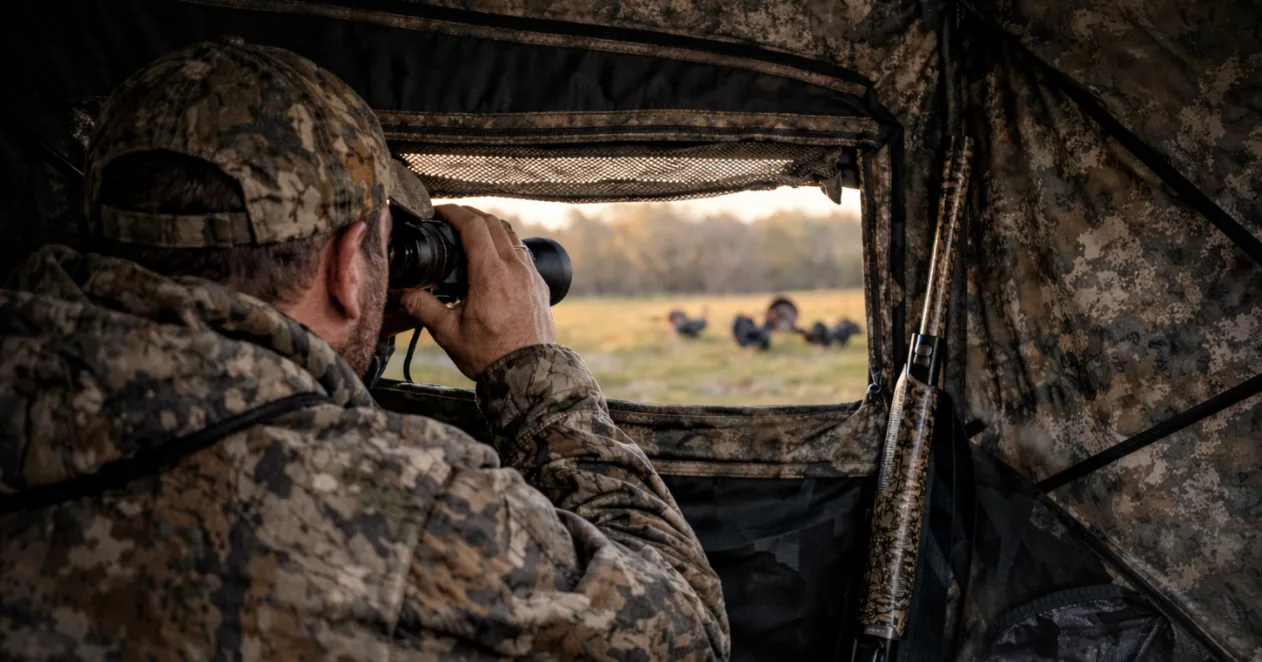
Turkey season comes around, and suddenly everyone has an opinion: set up a blind or stay mobile; get in early or run them down mid-morning. The advice piles up fast, and if you are newer to turkey hunting, it can feel like every experienced hunter you talk to has a completely different gospel.
Here is the honest answer: ground blind vs run-and-gun, both strategies work. What matters is whether the strategy matches you, your setup, and the birds you are chasing. Here we will help you figure that out before you are standing in the woods second-guessing yourself.
What Is Ground Blind Hunting?
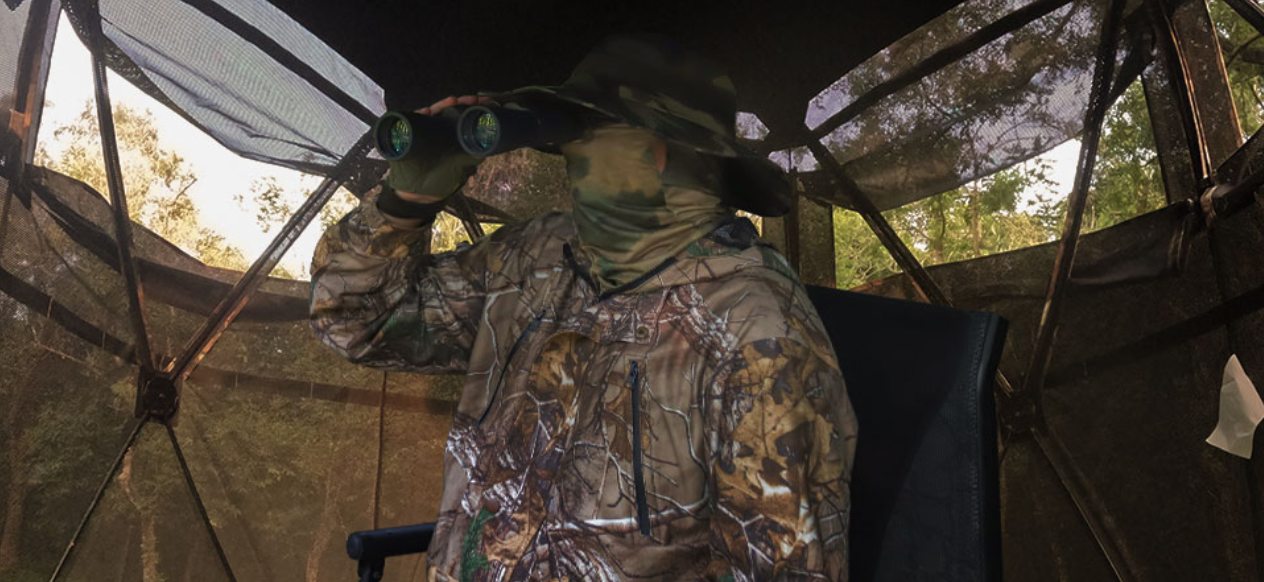
A ground blind hunt is exactly what it sounds like. You pick a spot, set up a portable pop-up blind or build a natural one from brush, and you wait and let the bird come to you.
The Real Advantages
- Complete concealment is the biggest one. You are fully hidden, which means movement inside the blind does not blow your hunt. You can shift your weight, reach for your call, even eat a snack, and the turkey never sees it.
- Weather protection matters more than people admit. A cold April morning with wind and rain is brutal when you are sitting against a tree. Inside a blind, you stay dry and warm enough to actually stay focused.
- Open fields and agricultural areas are where ground blinds shine. There is nowhere to hide in a picked cornfield or a green food plot. The blind create cover where none exists naturally.
- Turkeys genuinely do not mind blinds. This surprises a lot of hunters. Unlike deer, turkeys seem mostly unbothered by a blind that has been in place for even a day or two, especially when it is brushed in well.
- Bowhunters need blinds. Drawing a bow requires a large, slow movement. Without full concealment, you will get busted almost every time.
The Real Disadvantages
- Zero mobility. Once you are set up and a bird commits to a different field, you are stuck watching it walk in the wrong direction. That is a painful 45 minutes.
- Carry weight adds up. A quality pop-up blind, stakes, a chair, your bow or gun, decoys, and a bag. It gets heavy fast, especially on public land where you are hiking.
- Setup takes time. You cannot just drop a blind five minutes before fly-down and expect it to work. Birds notice new objects, especially shiny or unnatural ones.
- Pressured birds avoid predictable spots. If other hunters have been running blinds in the same locations all season, educated toms will simply not show up.
Who Should Be Hunting from a Ground Blind
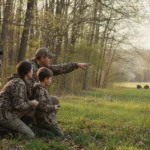
New hunters, kids, bowhunters, and anyone hunting open agricultural country. People with physical limitations that make sitting on the ground uncomfortable for hours.
How to Set Up a Ground Blind for Turkey
Scout your location at least a few days before the season and get the blind in place early. Brush it in with natural vegetation so it blends with the surroundings.
Clear shooting lanes quietly before the hunt. Position the blind with the door facing away from where you expect the bird to approach. Stake it down so the wind does not shift it during the sit.
Gear you need: a quality pop-up blind, a low-profile chair, a turkey fan or full decoys, a mouth call or pot call, and dark or black clothing for inside the blind.
What Is Run-and-Gun Hunting?
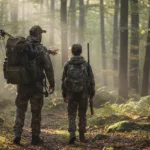
A run-and-gun turkey hunt is the opposite approach entirely. You move. You locate birds, close the distance aggressively, set up fast, call, and if it does not work, you move again.
Think of it like this: you are hiking public land, you hear a distant gobble on a ridge, and within ten minutes, you are set up 150 yards from that bird working him in.
The Real Advantages
- You match bird behavior instead of hoping it comes to you. If a tom is fired up and moving, you can intercept him. If he goes quiet in one area, you find another bird.
- Light and fast. Less gear means more ground covered. Some run-and-gun hunters carry almost nothing beyond a call, a vest, and a shotgun.
- Low-density areas reward mobility. On large properties or public land where birds are spread out, sitting in one spot all day can mean waiting for a bird that is simply not in the area.
- Shotgun hunters are well-suitedbecause the shot happens fast and at close range. No long draw, no slow movement. You call, the bird appears, and you shoot.
The Real Disadvantages
- Long distances and rough terrain wear you out. Run-and-gun on public land in hilly country is a workout. Some hunters underestimate this.
- Sitting positions get uncomfortable fast. You are leaning against a tree, sometimes on a slope, sometimes on roots. There is no chair. No cushion. Your back will remind you of this.
- Bowhunting run-and-gun is extremely difficult. Drawing undetected without a blind is a real skill that takes years to develop. It happens, but it is hard.
- You need natural cover. When a bird comes in, it will see you if there is nothing around you. A tree, brush pile, or terrain feature needs to be at your back.
- Weather exposure is real. Rain, cold, wind. All of it hits you directly.
Who Should Be Hunting Run-and-Gun
Experienced hunters who know turkey behavior well. Besides, shotgun hunters and anyone on large properties or public land. People who find sitting still for hours mentally difficult and would rather stay active.
How to Run a Run-and-Gun Turkey Hunt
Start before first light and listen for gobbles on the roost. Once you locate a bird, move toward him quickly but quietly, cutting the distance before he flies down.
Set up at least 100 yards away with a large tree at your back and good shooting lanes. Call to locate, then set up to work the bird in.
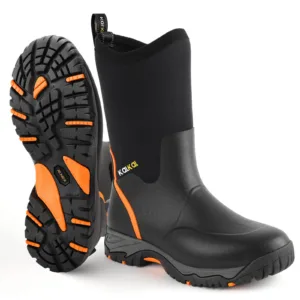
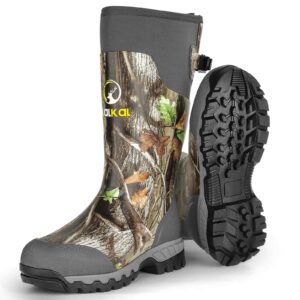
Gear you need: a turkey vest, mouth calls, a locator call like a crow or owl call, knee pads, camouflage that matches the terrain, and comfortable hunting boots you can actually cover ground in.
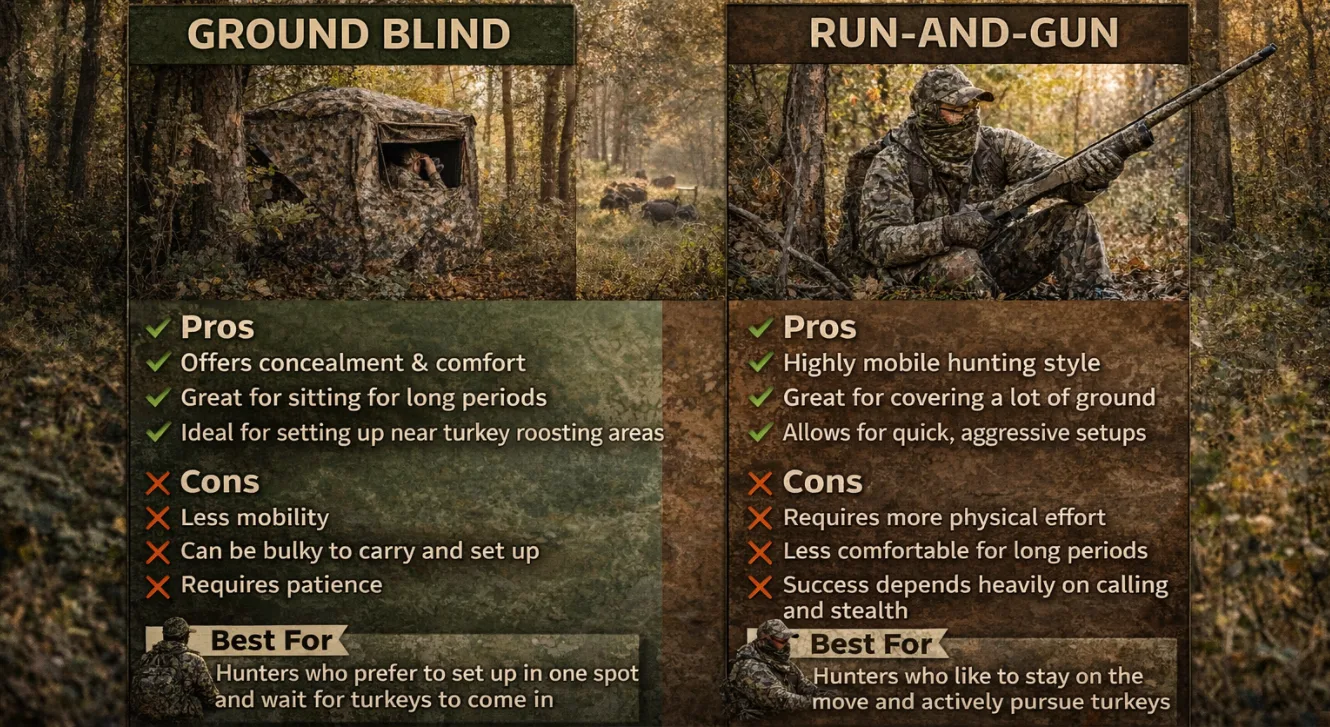
Which Strategy Should You Choose?
Choose Ground Blind If:
You are bowhunting, full stop. Also, choose it if you are hunting with a kid or a new hunter who needs room to move without blowing the hunt.
If you are in open country, fields, or food plots with no natural cover, a blind is not optional; it is necessary.
Bad weather predicted? Blind. Early season, when birds are patterned and predictable? Blind. And if you have any mobility issues or just want to be comfortable, there is no shame in that.
Choose Run-and-Gun If:
You are shotgun hunting and want a more active experience. Large properties and public land where you need to cover ground to find birds, reward this approach.
Heavy timber where birds are hard to pattern also suits run-and-gun because you need to go find them. Mid-to-late season, when birds have been pressured and are no longer walking predictable routes, is a good time to go mobile.
And if you are chasing vocal birds, especially in the early morning when toms are fired up, intercepting them beats waiting every time.
A Better Strategy: The Hybrid Approach
Here is something worth considering. The hunters who consistently kill birds often do not commit to just one method all day.
In the morning, set up a blind near a known roost or feeding area. Birds are patterned at dawn and often walk the same routes off the roost. Let that work in your favor while you are patient and concealed.
By mid-morning, if birds have gone quiet or moved off, pack up and run-and-gun. Gobblers often go silent around 9 or 10 a.m. after they have bred hens.
This is when getting mobile and locating a new bird makes more sense than sitting in an empty field.
Late afternoon, set back up near a field edge or feeding area where birds come to roost. Blinds work well again here because birds are returning to predictable spots.
You are not locked into one approach for the whole season or even the whole day.
To understand how these methods fit into a full hunting plan, read our Complete Turkey Hunting Guide.
Essential Tips For Turkey Hunting Success
Ground Blind Hunting Tips
- Scout thoroughly before setting up. A blind in the wrong location is just a tent in the woods. Know where birds are feeding, strutting, and roosting before you pick your spot.
- Get the blind in early. Two to three days before you plan to hunt is ideal. Brush it in with branches and natural material from the surrounding area.
- Location beats everything. The best blind in the world does not produce birds if it is 400 yards from where they actually want to be.
- Wear dark clothing inside the blind. The windows are dark, but movement inside can still catch a bird’s eye. Black base layers make a real difference.
- Use decoys. A hen and a jake decoy combination gives an approaching tom a visual target, so his attention is not on the blind opening. Learn how to set up turkey decoys properly.
- Be patient. Ground blind hunting rewards stillness. Commit to staying longer than feels comfortable. Toms often show up when you have nearly given up.
Run-and-Gun Tips
- Use locator calls to find birds first. An owl hoot or crow call can shock a gobble out of a tom at 300 yards and tell you exactly where to set up.
- Move slowly once you are close. Run toward the bird until you are in the general area, then slow completely down. Toms are moving toward calls, and one snapped twig can end the hunt.
- Set up against a large tree every single time. It breaks up your outline and gives you something solid at your back when you draw or raise your gun.
- Master mouth calls before you go. You need your hands free, and reaching for a slate call at the wrong moment will betray your position.
- Use terrain to your advantage. Ridges, creek beds, and saddles funnel birds naturally. Set up where the terrain already directs movement.
- Call aggressively, then go completely silent. Fire a bird up with loud cutting or yelping, then stop. Let curiosity do the work. Turkeys often close the last 50 yards in total silence.
Conclusion
Ground blinds and run-and-gun hunting are not competing philosophies. They are tools, and the best hunters know when to use which one.
If you are new, hunting with kids, or pulling a bow, start with a blind. If you are mobile, experienced, and covering public land, go run-and-gun.
And if you want to actually put birds down consistently, consider mixing both into the same day. Know your situation, pick your approach, and trust your scouting. The turkey usually decides the rest.
Leave a Reply