
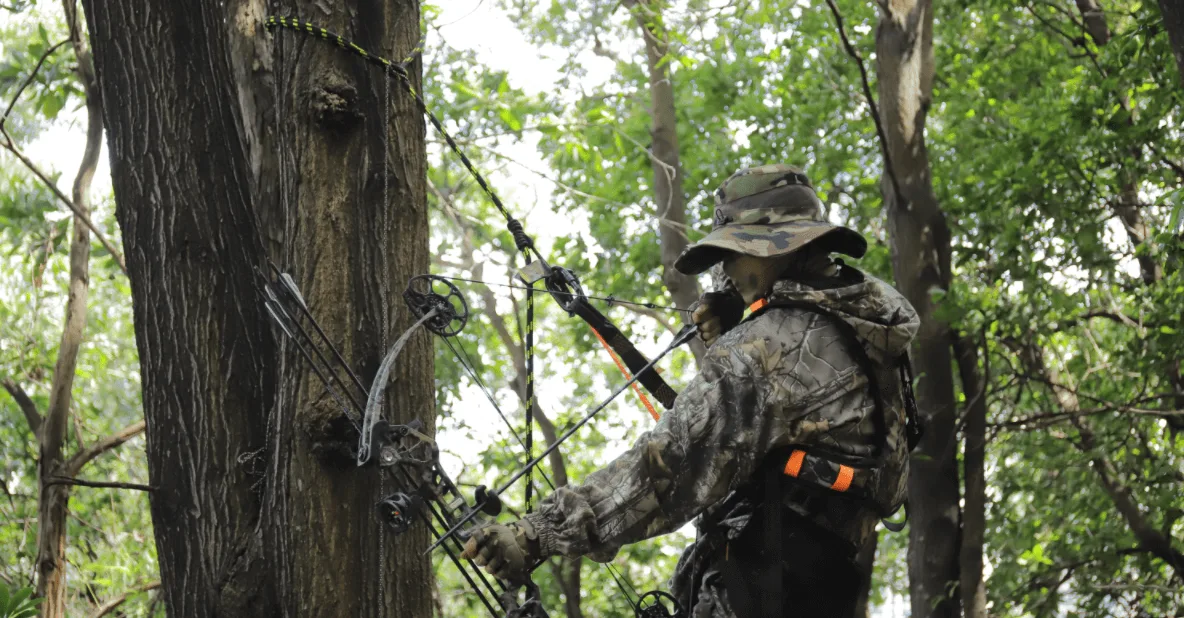
All the hunters who climb trees to get a better view understand that safety comes first. Whether it’s saddle hunting, treestand setup, or ladder stand, one mistake at the top can be fatal. There are two pieces of gear, Lineman rope and Tether rope, which are extremely important to keep you safe when climbing or putting your gear in place.
Nevertheless, most hunters tend to confuse the two or even ask whether one can use either. The two ropes are similar; however, they operate differently, and they are used for different purposes that pertain to safety. Let us have a look at their differences, when they are to be used, and why they are necessary for safe and efficient climbing.
What Are Lineman’s Rope and Tether Rope?
What Is a Lineman’s Rope?
A lineman’s rope (also known as a lineman’s belt) is a short and hard hard-wearing rope that should ensure you are securely attached to the tree as you climb. It is normally attached to the loops of the lineman on both sides of your saddle or safety harness.
You put it around the tree at the waist, tie both ends to the saddle loops, and use a prusik knot or an adjuster to get the slackness to the required degree. The weight is taken off, you lean back, and your hands become free to work.
Typical features of a lineman’s rope:
- Made from static climbing rope (usually 10mm to 11mm) for strength and low stretch.
- Rated for high breaking strength, often 5,000 pounds or more.
- Includes carabiners and an adjustable knot or mechanical device.
- Shorter in length than a tether rope, usually 8–10 feet.
It is mostly used by hunters during the process of climbing up and down the tree or using tree stands. It is ideal when you want to be free with your hands yet have security in case you fall.
What Is a Tether Rope?
The tether rope (or tree tether) is a rope that links you to the tree when you have reached your hunting height or when using a climbing stand. It is made to be used in constant falls, and you will always be attached to the tree.
At one end, it usually contains a big loop. You take it around the tree and put the rope through the loop, and tighten it. Then hook the other end to your saddle bridge or the rear D-ring on your full-body harness.
Main characteristics of a tether rope:
- Made from strong static rope, rated for climbing safety standards.
- Slightly longer than a lineman’s rope, usually 10- 12 feet.
- Uses a prusik knot or mechanical adjuster for length a
- Keeps you close to the tree during the entire climb or while hunting.
Its primary function is to avoid falling in case your stand is slippery or a climbing stick breaks down. You are well tied up and do not swing or fall far.
Are They Interchangeable?
Can You Use One Instead of the Other?
Although both ropes are safety tools, they are not equivalent. The rope of a lineman provides stability, allowing you to work with both hands free in climbing, although this does not offer constant attachment.
A tether rope, on the other hand, supports your body weight while you’re elevated, ensuring that you are always attached to the tree. But it restricts your movement in performing such activities as hanging steps.
In short:
- Lineman’s rope = stability+ mobile + working support
- Tether rope = continuous safety + limited range
It can be dangerous to use one in both cases. As an example, when you use a tether rope as the belt of your lineman, it becomes more difficult to put the rope around the tree at waist level. Likewise, as a tether, a rope that belongs to a lineman can have excess slackness, which then raises the fall distance.
Should You Use Both Together?
Yes, seasoned hunters tend to use the pair of ropes to be as safe as they can be.
When climbing and laying down steps, you can use the rope of the lineman, and when you arrive at the height you want to change to the tether rope. This will make sure that you are tied at each level.
Hunters will also use two tethers (one primary and one backup) in certain arrangements, such as saddle hunting. It’s about layering safety.
Even experienced hunters and mentors admit that the two ropes are necessary. Novices usually only use one, but when they get to know how to do it, they find how much safer the combination is.
The ones who are dependent on a single rope become more vulnerable, however, in situations of transition between climbing and standing poses. A slip in those few seconds can be very harmful.
How To Use Lineman’s Rope vs Tether Rope?
How To Use a Lineman’s Rope When Climbing
Using a lineman’s rope correctly is all about maintaining tension and keeping the right angle. Here’s how it works:
- Attach both ends of your lineman’s rope to your saddle’s lineman loops.
- Wrap the rope around the tree at waist level.
- Adjust slack using your prusik knot or RopeMan 2 device.
- Lean back slightly, keeping the rope tight while stepping up the first climbing stick.
- As you move up, slide the rope upward with one hand while keeping your balance.
- Once you reach your desired height, secure your tether rope before removing the lineman’s.
Pro Tip: It is always important to practice this technique on the ground first before being on an actual climb. Use very little slack and keep it at a constant level of tension.
How To Use a Tether Rope on a Treestand
Once you’re up the tree, it’s time to switch to your tether rope:
- Wrap the tether around the tree trunk above your head height.
- Feed the tag end through the loop and cinch it tight.
- Attach the free end to your saddle bridge or harness D-ring using a locking carabiner.
- Adjust the prusik knot or device so that you can lean comfortably without too much slack.
- Always keep the tether tightened while seated or standing in your stand.
When you have a climbing treestand in use, you have to pull your tether up and then lift the platform. Follow a rhythm: move tether, move seat, move platform, and reverse while descending.
In this manner, you are always attached 100% of the time- even in a case where the stand slips or a step fails.

Which Rope to Use for Different Hunting Styles?
Different hunting styles require slightly different rope setups:
| Hunting Type | Recommended Rope Setup | Why Choose This |
| Saddle Hunting | Use both lineman’s and tether rope | Lineman for climbing, tether for hunting position |
| Treestand Hunting | Primarily tether rope | Keeps you secured in a stand; lineman’s optional for setup |
| Ladder Stand Hunting | Mostly tether rope | Easy climbing; tether adds continuous safety |
| Climbing Stand Hunting | Tether rope mandatory | Keeps you attached during seat and platform movement |
In short, always adapt based on your style—but keeping both ropes available covers every situation safely.
Common Mistakes To Avoid
Many accidents happen because of small mistakes. Here’s what you should avoid:
- Too much slack: Reduces effectiveness in stopping a fall.
- Loose knots: A prusik that isn’t snug may slide unexpectedly.
- Improper attachment points: Always clip to your lineman’s loops or saddle bridge, never gear loops.
- Old or worn ropes: Retire any rope showing wear, fraying, or UV damage.
- Skipping ground practice: Test adjustments before climbing for real.
Even skilled hunters should inspect their setup before each climb.
Safety Checklist For Linemen’s and Tether Ropes
What To Check Before Using?
Before heading into the woods, do a quick safety inspection:
- Check ropes for cuts, frays, or glazing.
- Inspect knots or adjustment devices for proper function.
- Ensure carabiners are locking and rated for climbing.
- Test connection points on your saddle or harness.
- Check tags for rope strength and certifications (like EN1891 or UIAA).
If anything looks questionable, replace it. Your life is worth more than a rope.
How To Know If They’re in Good Condition?
Ropes degrade over time due to UV light, moisture, and repeated stress. Here’s what to look for:
- Soft or flat spots indicate weakened fibers.
- Discoloration or stiff sections can mean sun or chemical damage.
- Fraying ends should be trimmed and heat-sealed.
- If the rope feels spongy, it may have lost its core strength.
Most experts recommend replacing ropes every two to three years, even if they still appear fine.
Best Storage Practices
Proper storage can extend your gear’s lifespan. Here are things you should know:
- Store ropes in a cool, dry place away from sunlight.
- Avoid hanging them under tension.
- Keep them clean and dry after use—wipe off dirt and sap.
- Coil ropes loosely in a ventilated bag to prevent kinks.
- Never store near fuel, oils, or harsh chemicals.
Clean and cared-for ropes not only last longer but also perform better under stress.
Conclusion
The rope that is used by the lineman, as well as the rope that is used as a tether, is an important element of your hunting safety. They cannot be used interchangeably but are perfect complements to each other.
The rope of the lineman gives you the liberty to climb on and fit the equipment securely, and the tether rope secures you firmly attached to the tree at all times that you are not standing on the ground.
Take one with the other to be on the safe side. It is always a good idea to inspect your ropes, know your gear, and train on the ground before actual climbs.
Keep in mind that there is no deer and no hunt that is worth losing your life. With a proper arrangement, proper use of ropes, and a conscious practice, every hunt will not only be successful but also safe and pleasant.
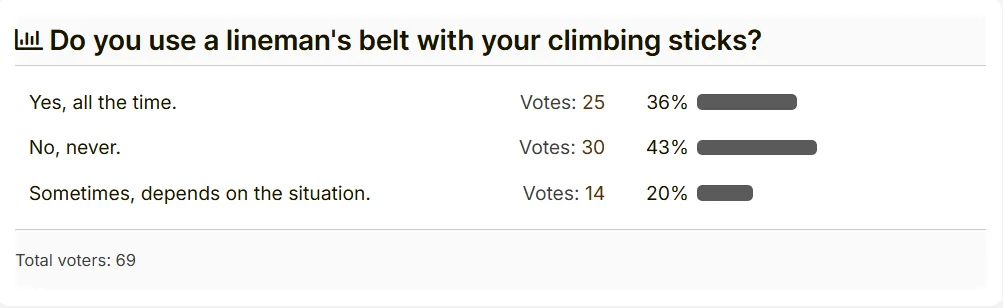
On the Archery Talk forum, there is a poll of ” Do you use a lineman’s belt with your climbing sticks? Based on the result, it seems that most hunters choose to use it when climbing. However, some of them still choose not to. What’s your opinion? Share and let us know your experience!






Leave a Reply