
The type of shot you use when you are deer hunting is very important. There is a technique employed by some hunters, and it is referred to as the high shoulder shot. It is not a usual broadside shot of the heart or lungs. Here, in this article, we will learn:
- What is a high shoulder shot
- how it functions
- the equipment to use in addition to its working
- tracking post-shot and its advantages and disadvantages
- Ethical considerations and the opinion of the hunters
Let’s discuss things in detail.
What Is a High Shoulder Shot on a Deer?
A high shoulder shot would imply that you are shooting a little higher than the normal front-shoulder height on a deer.
You do not shoot directly behind the shoulder blade and over the lungs and heart, but towards the top of the shoulder, and even into the shoulder blade.
The concept is to injure the spinal or nervous system by breaking the shoulder, and that will make the deer stop.
Where Should Hunters Aim?
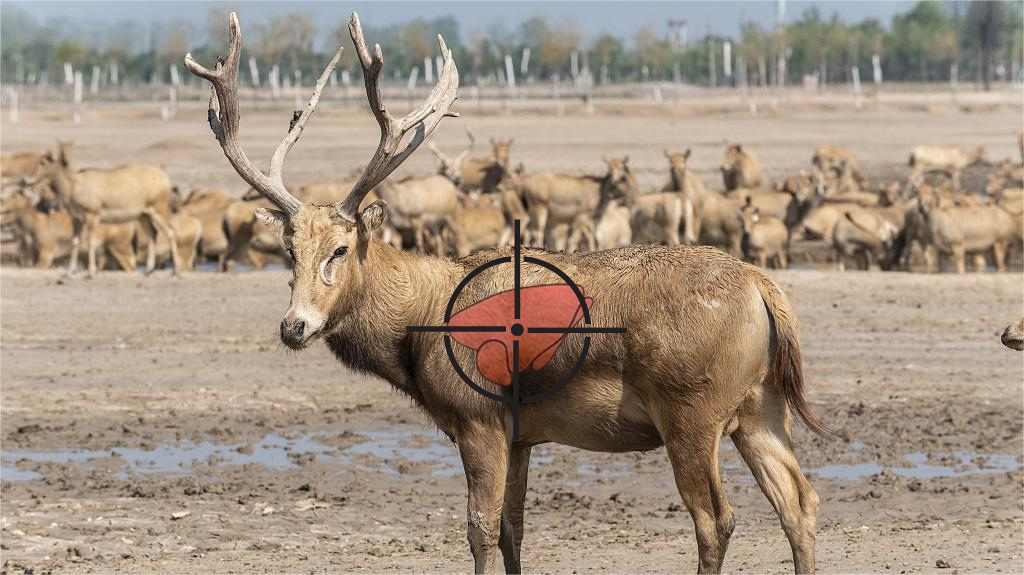
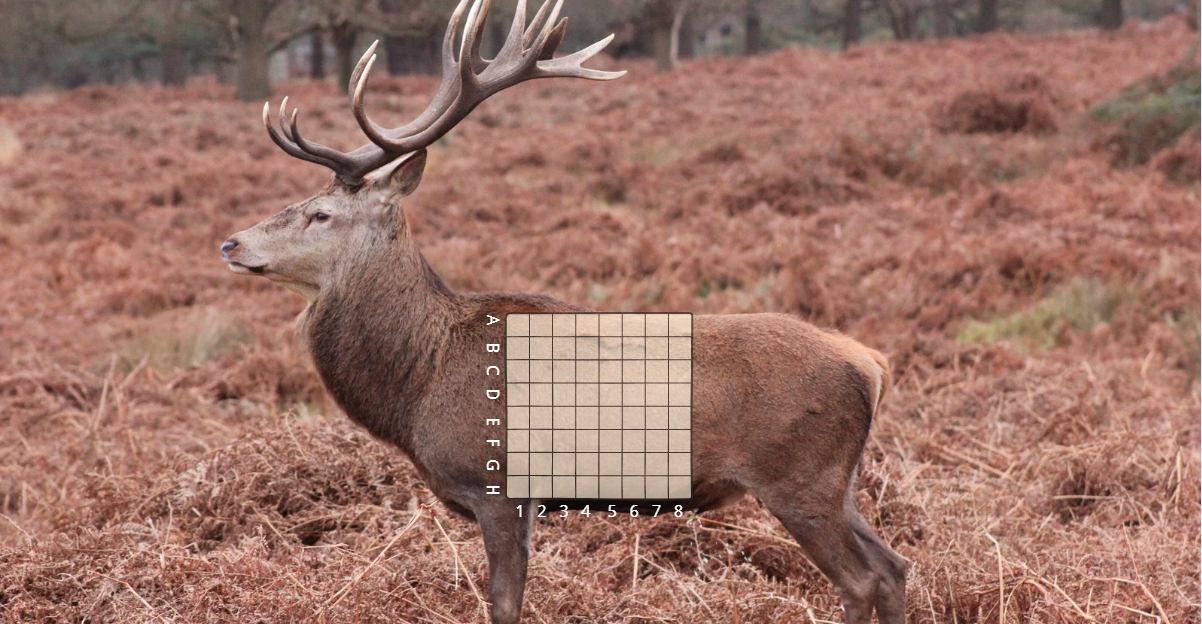
Precisely, you may put your cross-hairs just above the front shoulder (the armpit of the deer), and a little in front of the shoulder joint.
Hunters like this type of shooting because they think that the animal will be almost paralyzed and will not be able to walk. For example, on Reddit, one hunter posted:
“The benefit of the high shoulder shot is that the bullet penetrates the shoulder blade and the deer drops unconscious.”
It is effective in the right conditions: a good shooter, proper equipment, and the deer in a favorable position. Some hunters say it “floors” a deer when placed correctly.
How Does This Differ From Normal Shot Placement?
Normal placement is usually behind the heart/lungs region, just behind the shoulder, down to the point that both lungs are caught, and hopefully the heart.
That shot provides you with an organ strike resulting in a comparatively swift demise and, in most cases, reduced tracking.
The high shoulder shot is different as it is higher in position, nearer to the bone, shoulder blade, perhaps spine. Such an effect may be a sudden drop (in case of perfect); however, there may be more danger of hitting the bone, breaking meat, or missing vital organs when out of place.
We often read on the posts by hunters that when aiming too high or too forward, the deer may go, or have more time to take their flight. Moreover, since you are likely to shoot away more of the shoulder or blade meat, you lose more usable meat than when you have a perfect head shot. For instance:
“A high shoulder shot is great for stopping an animal from running off. The downside is that you mess up more meat.”
Therefore, the trade-off here is to kill the animal sooner vs. to save more meat and reduce the chances of a wounded animal.
What are the Pros and Cons of It?
These are some of the advantages and disadvantages of choosing the high shoulder shot.
⭐Pros
- Immediate immobilization: When it is placed in the proper position, it can cause the animal to fall to the ground quickly. Thus, it decreases the range of tracking. One hunter said, “The only two times I’ve gotten a deer this way … neither deer took a single step after being hit.”
- Reduced escape risk: This is particularly significant in land where the animal can be easily tracked (deep woods, steep hutches, wet ground, steep slopes, etc.).
- Useful in specific scenarios: When the deer runs between you and a danger (private land, river, cliff), you do not necessarily want it to run. One hunter on Reddit says, “A high shoulder shot is better than risking it running off into private land.”
❗Cons
- More meat damage: There is good meat in the shoulder part (shoulder roasts, in front quarter). Much of that can be spoiled by a shot through bone and blade. “You’re guaranteeing some meat loss vs a small chance in a heart shot.”
- Higher placement risk: If you hit too high, you might hit non-vital bone or muscle and cause a crippling wound rather than a quick kill.“If too high, the bullet could pass through the back straps, the deer will be wounded, but won’t die.”
- Ethical concerns: Unless you kill the animal immediately, you might be following a wounded deer, which is more dangerous and can break the hunting ethics and laws.
- Bullet and gun requirements: Since you are shooting into a bone or even the spine, you will require an effective caliber and a bullet that is designed to penetrate well and burst the bone. A less powerful round may not bring down the deer in time.
What Do Hunters Think About This Method?
Why Some Hunters Like This Method?
A high shoulder shot is preferred by many hunters as they attach importance to a particular result: an instant plummet or minimum tracking. In some situations, that beats slightly less meat damage.
Here are some opinions from hunters:
“I find them to be more effective, with less tracking, and minimal meat damage (I mostly prefer straps and rear quarters anyway).”
“If I want to anchor an animal, I will go high shoulder.”
They accept the trade-off: “Yes, I’ll sacrifice part of the shoulder if it means the deer doesn’t run.”
Others said: “For me, some meat is better than no meat!”
In summary, you may prefer the high shoulder shot, since you have certainty of recovery, little tracking, or the land imposes on you a shot where the deer would otherwise refuse.
What they like
A lot of people like the fact that when it hits, the deer may fall fast, minimizing the tracking and minimizing the chances of losing the deer.
Others claim that it comes in particularly handy when you have hard-to-find terrain to hunt, or you have some sort of boundary, or just need to drop the game fast.
It provides a new tool for the shot placement toolbox, where the conventional ones do not perform well.
What they dislike
A significant complaint is that of the meat loss. A perfect shot of the lung/heart is said to give a better yield.
The higher risk of misplacement. Many posts caution: “High shoulder shot is only safe when you are comfortable with your gear and placement.”
Besides, there are some ethical concerns: In case the shot does not kill instantly, the deer may run or suffer. Certain hunters say it is more morally dangerous. Like, “It’s an unethical shot for lazy hunters. You hit no vitals, and the deer is paralyzed and bleeding out.”
Yes, there are ethical issues. Although it is preferable to put the animal to death immediately, due to the position of the shot (bone, shoulder blade, or potentially spine), it is more likely that one will only cripple it, but will not kill it.
When the deer runs or suffers long, then that is not what many hunting ethics consider to be. It is the final duty of every hunter to make a quick and humane kill, not to bring meat home.
Therefore, according to many veteran hunters, only high shoulder shots can be made when one is sure of his shot, his equipment, his range, and terrain. If not, stick to standard heart/lung placement.
Gear To Choose For High Shoulder Shot
In case you are thinking of the high shoulder shot, you should coordinate your equipment with it. Rifles, caliber types of bullets, and next bowhunting.
Rifles, Calibers, Bullet Types
- Caliber: You want a caliber that has high penetration, one that has enough energy to break through bone/shoulder blades and hit a vital organ or shock the nervous system. Calibers such as.270, .308, 7mm Rem Mag, or higher, are popular with many hunters based on the area and size of the deer. Further check and avoide use these worst deer hunting calibers.
- Bullet Construction: You desire bullets that are tenacious, diagnostic of bone, and energy conveyors. It is commonly recommended to use controlled expansion bullets, monolithic bullets, or bonded bullets.
- Distance: Due to the precision that is required to be used, shorter ranges favor this shot. Most of them suggest under 200 yards and good rest/support.
- Shot Placement Precision: Due to the risks (bone deflection, more severe meat damage, absence of vitals), it is important to be sure how to fire the bullet in the small hole above the shoulder and still hit the vitals behind.
Bowhunting With a High Shoulder Shot
Yes, bowhunting can use a high shoulder shot, but it’s more complex and riskier. Here are the eye points.
- Angle and Broadhead: In the case of a bow, you want a bow with broadheads that are penetrative and sharp-edged. The use of fixed-blade or mechanical broadheads that can be assured of cutting vital organs is desirable. Yet, when you strike a hard bone (shoulder blade), you may have deflection or a non-lethal strike.
- Humane kill: In case the shot is shot perfectly, and the arrow goes behind the shoulder and into the vitals (or spine), that may be humane. But as you strike chiefly on bone or muscle, you may cut the deer or inflict pain. That adds the ethical issue.
- Recommendation: Most archery hunters feel more comfortable with the standard behind-shoulder position with lungs/heart as the target, as it provides them with a greater margin of error. When you go to the high shoulder with a bow, you have to have a very high proficiency, perfect range (very close), and be familiar with your gear.
In summary, with rifles, a high shoulder shot can be used, and equipment and technique have to be equal. With a bow, you only need to think about it when you are very sure of positioning and equipment. Otherwise, revert to the less hazardous standard shot.
Track And Retrieve a Deer After High Shoulder Shot
You are supposed to be ready to track and recover the deer even when you want to make a high shoulder shot. Ethical practice is enhanced through good tracking.
Signs To Look For When Tracking
- Blood trail: As soon as the shot has been fired, closely observe the point of impact on the deer. In a high shoulder shot, the location can be heavy bleeding at the shoulder, hair/feather blow-out, or even fragments of the blade or bone.
- Footprints, drag marks: When the deer attempts to move, particularly when the shoulder blade is broken, he may limp, drag the shoulder, or take short steps and then fall.
- Drop point marker: Note where you shot, what the deer did next (ran? halted?), and mark the entry point. Since a high shoulder shot can put the deer nearly down on the spot, you can expect the deer to be nearby, but be sure to look behind the shot.
- Look for the exit wound: When the bullet is shot through, you can have a wound or disturbed vegetation that is seen behind. That tells you the bullet passed through, good for tracking.
Some Gear To Use
- Good tracker’s vest/backpack: Enough room for orange flagging, first-aid kit, GPS/phone.
- Flagging tape or chalk: To mark where you last saw blood or hoofprints.
- Blood trailing kit: Gloves, small saw/knife for bone in field dressing, measuring tape for steps.
- Game cart or drag strap: If the deer is very near, you’ll need gear to haul it out. A broken shoulder may make dragging tricky.
- GPS/phone with compass: To ensure you don’t get lost, especially if the animal runs into rough terrain.
Recommended Tracking Techniques
- After firing, wait 5-10 minutes (if safe) to allow the deer time to collapse. Then approach slowly, scanning the area.
- Always look in the direction the deer ran; often, it will try to go downhill or into cover.
- Look for blood next to rake marks or where the hoof struck. The first few drops tell you the direction.
- Move slowly, mark every change of direction with flagging tape so you don’t lose the trail.
- If you hit the shoulder blade and the deer collapsed almost right away, check within a 1a 0-20-yard radius before expanding the search.
- Be patient; a badly placed shot (too high or too forward) may mean the deer ran some distance. Be prepared to track longer.
- Once you find the deer, assess the damage. Even if you’ve executed a high shoulder shot perfectly, be sure of death before field dressing.
Using these techniques, you greatly increase the chance of recovering the deer quickly and ethically.
Conclusion
The deer’s high shoulder shot is a legitimate technique, but with an obviously lower cost. You aspire to more than the traditional placement, with its immediate drop and the minimum of tracking.
That is very tempting in some landscapes or circumstances. But you lose more meat, and take a greater risk of placement, and you need to make sure that your equipment and abilities are adequate.
Ultimately, it is not only shooting a deer, but in a manner that respects the animal, causes minimum suffering, removes or leaves meat where possible, and retrieves the game in a clean manner. Select your shot positioning not only with good intentions but also with good practice and morals.
Looking for more than just deer shot placement? Our Complete Deer Hunting Guide covers everything for you, from finding a deer to putting it on your table.
Leave a Reply