
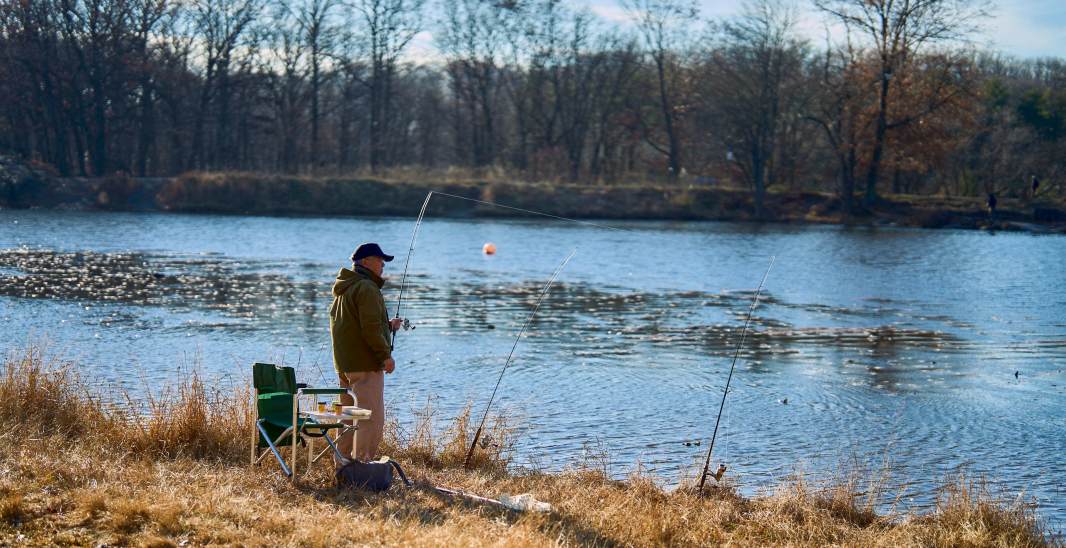
Alaska is popular for sport and commercial fishing worldwide. With millions of lakes and thousands of rivers, it offers some of the world’s best fishing spots. The rules and seasons can be tricky as they change in different regions each year, but no worries, here’s everything you need to know for the 2025 Alaska fishing seasons.
When Is Fishing Season In Alaska?
Fishing in Alaska is mostly open year-round for all species unless specified otherwise in special regulations, what’s more, season dates, bag limits, and size limits vary by species and location.
Below is a clear overview of the fishing regulations for different species:
King Salmon Fishing Season
- SeasonDates: October 1, 2024 – April 30, 2025
- ResidentsCatch Limits: Up to two king salmon, 28 inches or greater in length.
- Non-residentsCatch Limits: Up to one king salmon, 28 inches or greater in length.
*Note: For non-residents, you must record each king salmon caught on your license or a harvest record card immediately upon landing.
Halibut Fishing Season
- Season: February 1 – December 31, 2025 (Fishing is closed on Tuesdays)
- Catch Limits: Daily limit of 1 fish. Halibut must be less than 37 inches or over 80 inches in length.
*Note: No retention on Fridays from July 9–September 13, 2025, unless using a Guided Angler Fish (GAF) permit.
Lingcod Fishing Season
- Season: May 16 – November 30, 2025
- Catch Limits: Residents can keep 1 daily (no size limit).
Silver Salmon (Coho) Fishing Season
- Season: August through September 2025
- Catch Limits: Daily limits of 6 fish and above 16″ in length in saltwater.
*Note: Regulations and seasons are subject to change. Please keep track of the latest information with us!
What Alaska Fishing License Do You Need?
According to the record, in the year 2024, Alaska issued 150,297 Resident Fishing License and 352,105 Nonresident Fishing License, allowing both local anglers and visitors to enjoy the state’s rich fishing opportunities.
This impressive number reflects the popularity of fishing in Alaska, showcasing the state’s vibrant outdoor recreation activity.
If you plan on an Alaska fishing trip, you know that the first thing to do is to get a fishing license online.
Who Will Need a Fishing License?
Normally, anglers over 16 (non-residents) or 18 (residents) must have a fishing license.
Alaska residents who are 60 or older, as well as disabled veterans living in the state, can enjoy the great benefit of fishing without a sport fishing license. However, they need to apply for and have an ADF&G Identification Card.
Notice that your license is only valid from the date of purchase through December 31st of each calendar year. If you plan to fish regularly, you’ll need to renew your license each year to stay compliant with state regulations.
In the following section, we have summarized what fishing licenses are available and how much they cost for residents and non-residents.
Resident Fishing Licenses
| Resident Annual Sport Fishing License | $20 |
| Resident Annual Sport Fishing and Hunting License | $60 |
| Resident Annual Low Income Sport Fishing | $5 |
| Resident Annual Sport Fishing License for the Blind | $1 |
| Resident Annual King Salmon Stamp | $10 |
Non-Resident Fishing Licenses
| 1 Day Sport Fishing License | $15 |
| 3 Day Sport Fishing License | $30 |
| 7 Day Sport Fishing License | $45 |
| 14 Day Sport Fishing License | $75 |
| Nonresident Annual Sport Fishing License | $100 |
| Nonresident Annual Hunting and Sport Fishing License | $260 |
| 1 Day King Salmon Stamp | $15 |
| 3 Day King Salmon Stamp | $30 |
| 7 Day King Salmon Stamp | $45 |
| 14 Day King Salmon Stamp | $75 |
| Nonresident Annual King Salmon Stamp | $100 |
Commercial Crewmember License
| Licenses | Resident | Non-resident |
| Crewmember Annual License | $60.00 | $252.00 |
| Child Crewmember Annual License | $5.00 | $197.00 |
| Crewmember 7 Day License | $30.00 | $30.00 |
| Crewmember Duplicate (replacement) License | $5.00 | $5.00 |
*Pro Tip: Licenses can be purchased online through the ADF&G website, at ADF&G offices, or from authorized license vendors across the state. You can carry a physical copy of the license or store it digitally.
Where to Fish in Alaska?
Alaska offers numerous fishing destinations. The following are some of the popular wild water you can consider:
- Kenai River: Renowned for King Salmon runs, especially in late May to early August.
- Kasilof River: Known for King Salmon fishing, with peak runs similar to the Kenai River.
- Southeast Alaska: Offers diverse fishing opportunities, including King Salmon, Halibut, and Silver Salmon.
- Homer: Famous for Halibut fishing, with a season running from February to December.
- Herring Cove: Unique “no fish size limit” for residents.
- Southeast Alaska: Deep-water rockfish and yelloweye.
What Fish Activity Are Open To You In Alaska?
Alaska offers four fishing types, but the rules vary based on residency status and the intended use of the fish caught. This table shows the rules for fishing in Alaska, including what residents and non-residents can do and the methods of fishing allowed for different purposes.
It’s important to familiarize yourself with these regulations to ensure a responsible and legal fishing experience:
| Conditions | Commercial | Sport | Subsistence | Personal Use |
| if you are currently living outside of the State of Alaska | Yes | Yes | No | No |
| living in Alaska, but have been here less than one year | Yes | Yes | No | No |
| living in Alaska, and have been here for at least one year | Yes | Yes | Yes | Yes |
| keeping your fish for personal or family consumption | Yes | Yes | Yes | Yes |
| bartering or trading your fish with other people | Yes | No | Yes | No |
| selling your fish | Yes | No | Maybe | No |
| If you are catching your fish with rod and reel | No | Yes | Maybe | No |
| catch with dipnets | No | No | Yes | Yes |
| catch with seine nets or gillnets | Yes | No | Yes | Yes |
| catch with other gear | Yes | Maybe | Yes | Yes |
When fishing in Alaska’s fresh waters, here are some specific regulations you should be aware of to ensure sustainable practices and protect the ecosystem.
- Firstly, fish may not be taken using fixed or weighted hooks and lures, except for those that are commercially manufactured.
- Additionally, multiple hooks with a gap larger than ½ inch between the point and shank are prohibited, as is the use of spears and spearguns, unless allowed by local regulations.
- If a fish is accidentally hooked anywhere other than its mouth, it should be released immediately to minimize harm. If you plan to release a fish, do not use a gaff for puncturing it, as this can cause unnecessary injury.
- Remember that intentionally wasting or destroying any species of sport-caught fish is illegal.
- Lastly, selling or bartering sport-caught fish or their parts is not permitted, and live fish cannot be used as bait.
By adhering to these guidelines, anglers can enjoy a responsible and fulfilling fishing experience while preserving Alaska’s beautiful waters and environment.
Conclusion
The new regulations for Alaska fishing seasons may be subject to change, be sure to visit the Alaska Department of Fish and Game or call local offices to ensure you are legally fishing at the right time and the right spot.
For any changes, we will update this post to keep you posted. Subscribe and stay tuned!
Get information for fishing in more states:
Leave a Reply