

One of the most controversial rules of hunting deer in the United States is known as the antler point restriction, or APR. Most hunters are in support of it to increase the quality of herds, but some feel that the practice restricts them from hunting.
It is necessary to know and understand the way APR functions to hunt legally, responsibly, and strategically. These laws determine how deer are managed in various states and determine what bucks hunters are allowed to harvest at each season.
The size of the trophy is not APR’s only impact on the deer population. It also affects deer health and population balance. This guide describes the use of APR in detail, the advantages, disadvantages, and tricks in regulated hunting to be successful.
Why Do Antler Point Restrictions (APR) Exist?
What Are Antler Point Restrictions?
Antler point restrictions limit the bucks that hunters can harvest, depending on the number of antler points. A point is considered to be an antler projection at least one inch in length from the base to the tip.
The main beam tip is another legal point in many states. The APR regulations were developed to ensure that young bucks are not harvested early to enable them to grow to maturity.
In the absence of such regulations, the hunters tend to harvest yearling bucks even before they can reproduce. This removes older, mature bucks in the herd and hurts genetic quality in the long term.
APR programs provide an improved age composition within the deer population and healthier herds of larger, more mature bucks.
Origin and Primary Goal of APR
Antler point restrictions started because of wildlife management studies done in the late twentieth century. Biologists have noted that high hunting pressure eliminated excessive numbers of young bucks before they became sexually productive.
Consequently, only a small number of deer lived beyond one or two years, resulting in smaller averages in the antlers. APR came into place to enable bucks to enter older age classes without affecting the sustainable hunting practices.
The main idea is not to make herd structures healthier to raise trophy size. A stable population structure will favor natural breeding patterns and improved genotypes.
This will make populations of the deer flourish across several generations. Besides that, APR supports ethical hunting through patience and selective harvesting.
States That Have Antler Point Restrictions
The rules regarding APR vary throughout the United States. Each state has defined rules depending on the population of deer in the area and the habitat of the deer.
Such as, Alabama requires a buck tag of at least 4 points or better on one side of the antler, and that is no fewer than one buck tag per season. This law safeguards young bucks and preserves old males in the future.
In Missouri, there are four-point minimums of one antler per county, and in Pennsylvania, there are three- and four-point APRs, but based on the area. Size and point limits exist in specific areas in Florida and Michigan, respectively.
Other states, such as Texas or Wisconsin, do not have any compulsory APR or implement them only in a few counties. These have been dynamic and usually vary depending on herd surveys, hunter participation, and habitat management plans. Ethical and legal hunting requires that one be aware of the local rules.

Debate: Pros and Cons of Antler Restrictions
The APR laws are very controversial among hunters and wildlife managers. Advocates believe that APR enhances the quality of the herd, and opponents think that it limits hunting opportunities.
Both arguments are acceptable, and it is imperative to know the advantages and disadvantages of both arguments as a responsible hunter.
The Benefits of Antler Point Restrictions
- More Mature Bucks
Increased mature bucks are one of the greatest achievements of APR. Investigations reveal that the regions with APR tend to witness an increase in legal mature bucks with time. This is a more rewarding hunting experience, and this is a way of helping to keep the population sustainable.
- Better Hunting Experience
APR enhances the hunting experience, as it promotes discriminatory harvesting and forbearance. Hunters are able to watch how the deer act in the wild without being pressured to kill all the bucks. The adult bucks become more visible during rut periods, which include chasing and sparring.
These salient features increase the observation possibilities for both the hunters and the wildlife photographers. APR ethical hunting tends to maximize satisfaction and pleasure during the hunt.
- Improved Deer Herd Health
A more even-aged distribution results in a better survival rate and genetic quality of fawns because they can be bred by mature bucks. APR helps to avoid excessive overgrazing of yearlings that may disrupt the population dynamics.
The healthier bucks will be a part of the healthier herd that is able to withstand diseases and make it through severe winters.
The wildlife agencies ensure that natural breeding cycles and population sustainability are facilitated by keeping the male animals of the same species alive.
- Increased Trophy Potential
APR has an indirect effect of increasing the population of trophy bucks in the long run. With age, the antlers become complete and therefore, more impressive racks are produced by younger bucks.
There is a tendency among hunters in the APR areas to observe bigger average sizes of the antlers with the passage of a few seasons. This promotes a trophy-based, wait-and-watch ethic as opposed to rushing about and harvesting young bucks.
The Downsides of Antler Point Restrictions
1. Reduced Hunting Opportunities
The restriction of the harvest opportunities is one of the primary objections to APR. Hunters can have numerous bucks but not be able to shoot them because of the requirements of the points.
Legal bucks may be difficult to find in regions where there is a high population of hunters. It may be frustrating to novices or amateur hunters who are used to regular harvests.
2. CWD and Older Buck Concerns
The deer population boosts due to APR. Those older bucks are more vulnerable to chronic wasting disease (CWD). Wildlife managers have been monitoring these dangers when they introduce APR regulations.
Prolonged life of bucks can also cause high competition and pressure in the herd. Although these issues are present, close-following and hunting changes tend to address major risks.
3. Misidentification Mistakes
It is difficult to judge bucks in the field in a short period of time, particularly in low light or at a distance. Hunters can hit an illegal buck by mistake, which makes them face fines or loss of license.
Hunters can minimize errors through training and practice, such as using trail cameras, and participate in observation exercises to learn how to identify legal bucks.
What Hunters Think About Antler Point Restrictions
The views of Hunter regarding APR differ vastly.
The trophy hunters usually favor these regulations since they get more chances to hunt mature bucks. Meat hunters sometimes contradict harvest limitations. Surveys show that hunters’ acceptance increases as they understand the biological purposes of APR.
It is a common adaptation strategy for experienced hunters to learn selective hunting skills and enhance good judgment in the field. Education and regular enforcement of ethical standards promote obedience and benefits in the long run to populations of deer.
How to Field Judge a Buck in Seconds?
Hunters need some practice to recognize the legal bucks in APR areas. Begin with a single point of attention, as shown on an antler, before counting. Record the number of tines visible of the required length, such as brow tines, where allowed. Take no haste; wait till you can see broadburst clear or quartering.
To enhance accuracy at the range level, use binoculars or rangefinders. Trail camera photographs are very good training aids in estimating the values of points in varying light conditions. Hunters, through experience, can make a judgment of identifying a legal buck.
How Are Antler Points Counted?

Antler points are solely counted on a single antler unless state regulations specify otherwise. The tines should be longer than one inch. Tines that are broken are not counted unless they meet the required minimum length.
The tips of the main beam are legal points. It might or might not count on local rules, some unusual or abnormal antler growths (such as drop tines). A person should never hunt without consulting the state, which has its own regulations. Correct counting saves on legal fines.
▶Learn more details: Beginner’s Guide on How to Count Points on a Deer
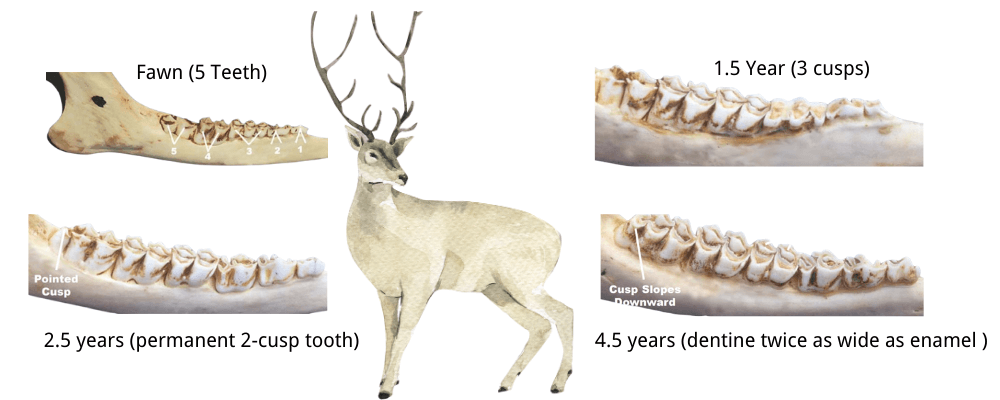
Obvious Signs to Determine a Deer’s Age
Antlers are not a good method of estimating the age of the deer; instead, a more effective way is to check the body size and shape.
The yearlings often have thin bodies, long legs, and narrow chests. The developed bucks have thicker necks, deeper chests, and darker coloration of the muscularity. Older bucks also have a sagging belly, which is sagging and their shoulders are very muscular.
Another reliable aging procedure for people handling harvested deer is the evaluation of tooth wear. Antler structure coupled with body watch could assist the hunters in making ethical decisions in the APR areas.
Unique Hunting Tactics for APR Areas
1. Adjusting Your Strategy
Hunters must be discriminating and follow the APR regulations to ensure the protection of the herd.
You should identify target areas, including transit routes and intersection points through feeding zones and cover, where male deer frequently interact.
And, monitor seasonal trends to establish important resting areas. You can use trail cameras to monitor the movement of legal bucks during the busiest period.
2. Patience and Observation
Learning patience is essential in APR practices. Watch the behavior of the deer and take some time to study them. Letting small bucks pass by is likely to result in the possibility of meeting more legal deer in the future.
A mature buck often follows a consistent pattern, but you must watch its movement, wind direction, and time of day. Observational abilities enhance multi-season performance during harvest.
3. What If You Shoot the Wrong Buck?
Errors do occur even to accomplished hunters. If you accidentally shoot an illegal buck, you must report to the local authorities at once. By doing so, you might avoid reduced fines or legal troubles because of honest reporting.
Take away the lesson to avoid the mistakes in the future. Check and adjust field practices, plus the number of points to check during the pre-shot process twice. Moral hunting in APR zones needs training, practice, and caution.
Common Questions About Antler Point Restrictions
Do Antler Restrictions Actually Increase Antler Size?
What Counts as a Legal Point?
Are Youth Hunters Exempt from APRs?
What Is the 3-Up Antler Restriction?
Do Drop Tines Count?
Conclusion
Antler point restriction is an effective tool for managing deer populations, as long as it is properly done. It promotes healthier herds, balances age structures, and fosters ethical hunting practices.
While it may restrict some hunters, APR encourages patience and selectivity, enhancing the overall hunting experience and leading to more mature bucks and improved genetics over time.
Understanding APR ensures legal and responsible hunting and maximizes opportunities across seasons. Hunters can make the most of APR regions by correcting their field judgment, observational skills, and familiarity with state regulations.





Leave a Reply