
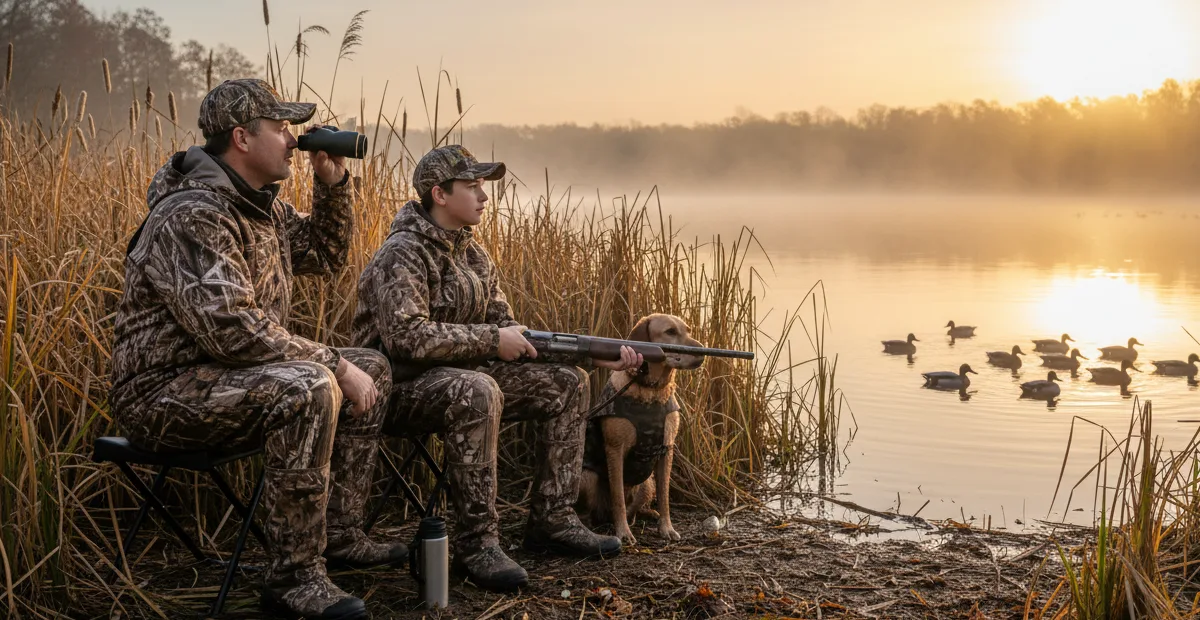
My neighbor took his seven-year-old son deer hunting last November. The kid was bored within forty minutes, started whining about his feet, and they had to pack up and leave before the sun was even fully up.
What happened is that dad was frustrated, and the kid felt bad. That story is more common than most hunting parents want to admit.
Here is the thing, though. It did not have to go that way. With a little preparation and honestly just a shift in mindset about what a “successful” hunting trip with a kid looks like, that morning could have been the start of something really cool instead of a memory they both want to forget.
So let’s talk about how to actually do this right.
When Should You Introduce Kids to Hunting?
It Is Not Really About Age
Every hunting dad I have ever talked to has a different answer when you ask what age is right to bring kids along. Some say six to ten, some say “whenever they ask.” And honestly? They are all correct.
The real question is not how old your kid is. It is whether they are emotionally ready. There is a massive difference between a focused, curious eight-year-old and a restless, easily frustrated twelve-year-old.
Physical age tells you almost nothing. What you are actually looking for is whether your kid can handle being uncomfortable for a little while without totally melting down, and whether they are genuinely curious about the natural world.
That second part matters more than people realize.
Ages 4 to 6: Do Not Even Think About Hunting Yet
Seriously, at this stage, the best thing you can do is just get them outside and let nature do the work for you.
Bring binoculars on walks and encourage them to look for wildlife. Teach them to look for deer tracks in mud near creek beds. Show them what a scrape looks like on the ground, or point out a rub on a small sapling where a buck rubbed velvet off his antlers.
Let them hold a turkey feather and ask questions. And when the moment feels right, talk about why hunters do what they do, not in a defensive way, but in an honest way about food and conservation.
The fact that hunters fund more wildlife habitat than almost any other group in the country through license fees and the Pittman-Robertson Act.
You are not teaching them to hunt; instead, you are teaching them to care. And that is the whole foundation.
Ages 7 to 10: Start Getting Them Involved
Now they can actually participate in something real. Let them help you pack the bag the night before, and teach them the four basic firearm safety rules, even if they will not be handling a firearm for years.
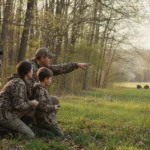
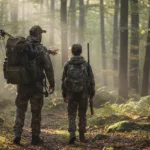
Bring them into the field with you and let them watch a real hunt happen. Interests start by creating some memories together, and just do not make harvesting an animal the point of the trip.
How Kids Can Actually Participate in a Hunt?
Give Them a Job
Kids who feel like they are just sitting there watching you do something cool get bored fast. Those who feel useful stay engaged, so give them some simple hunting activities they can do.
Hand them the binoculars and make them the official spotter, or let them be in charge of calling. A turkey box call or slate call is surprisingly easy for kids to use, and they absolutely love the sound it makes.
Teach them to identify tracks, since a six point set of deer tracks versus a doe track is actually a pretty interesting thing to learn and kids pick it up fast.
Let them bring a small camera or use your phone to photograph whatever they see.
One family I know brings a laminated wildlife identification card for their state and turns the sit into a kind of scavenger hunt. How many different bird species can you spot before 9 am? It sounds simple, but it genuinely works.
The Snack Strategy Is Not Silly
For an all-day hunt, you need some fun strategies to keep kids engaged.
Pack snacks that only come out during hunting trips. I know that sounds like a small thing but it creates a ritual around the experience.
Kids are deeply ritualistic creatures. When the camo goes on, and the special snacks come out, something in their brain starts to associate hunting with good things.
A bag of beef jerky and some hot chocolate in a thermos has saved more hunts than good scouting has.
Be ready to leave early without making it a big deal. That is probably the most practical advice in this entire post.
If they are cold and done, just go. No sighing. No “we almost had one.” Just pack up, grab breakfast on the way home, and let the morning end on a good note.
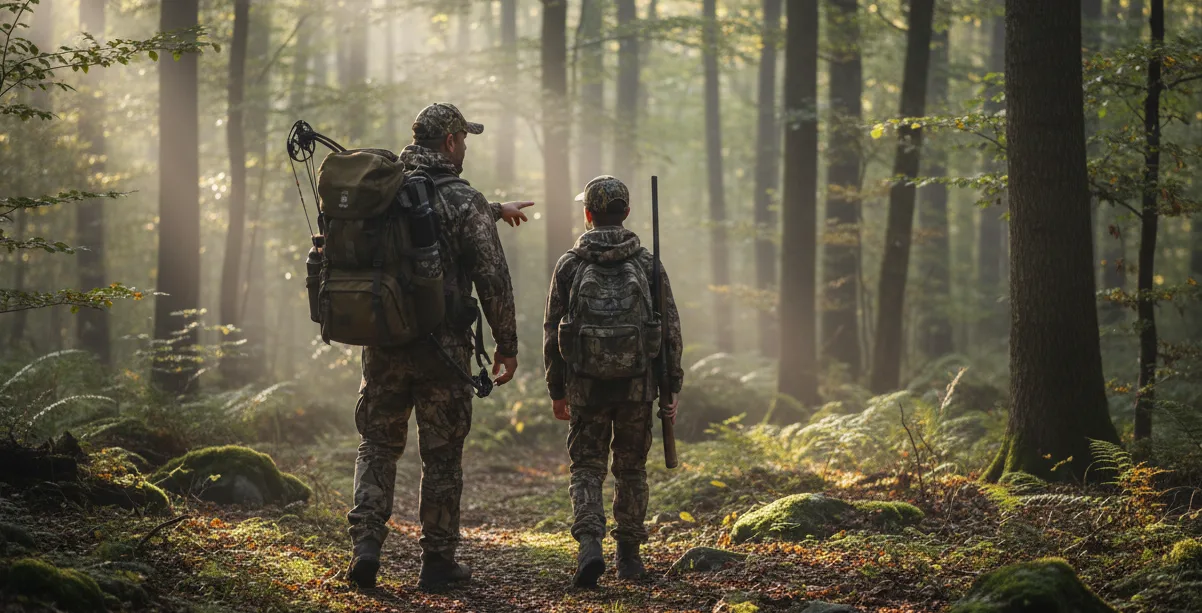
Choosing the Right Hunt for a Kid
Start With Small Game, Not Big Game
I know you want to take your kid on a deer hunt. I get it. But hear me out on this.
Small game hunting is genuinely better for young kids for a few real reasons. You are moving, which keeps their body temperature up and their attention from completely bottoming out.
Squirrels and rabbits are abundant in most areas, and they require more action and less waiting. Shooting opportunities come up more often, so there is less of that silent waiting. Adults can handle it, but kids struggle with it.
And when you are after squirrels, it does not matter much if your kid shifts around or whispers too loudly.
Big game hunting is a different thing. It requires long, silent sits and potentially hours between any action. One chance that might disappear the second someone sneezes.
That is a high-pressure environment that most kids are genuinely not ready for, and putting them in it before they are ready is how you kill their interest before it ever gets started.
Small game first. Big game when they are asking for it.
▶Learn More: Best Species and States to Start First-Time Youth Hunting
Safety Rules Kids Need to Know Before Anything Else
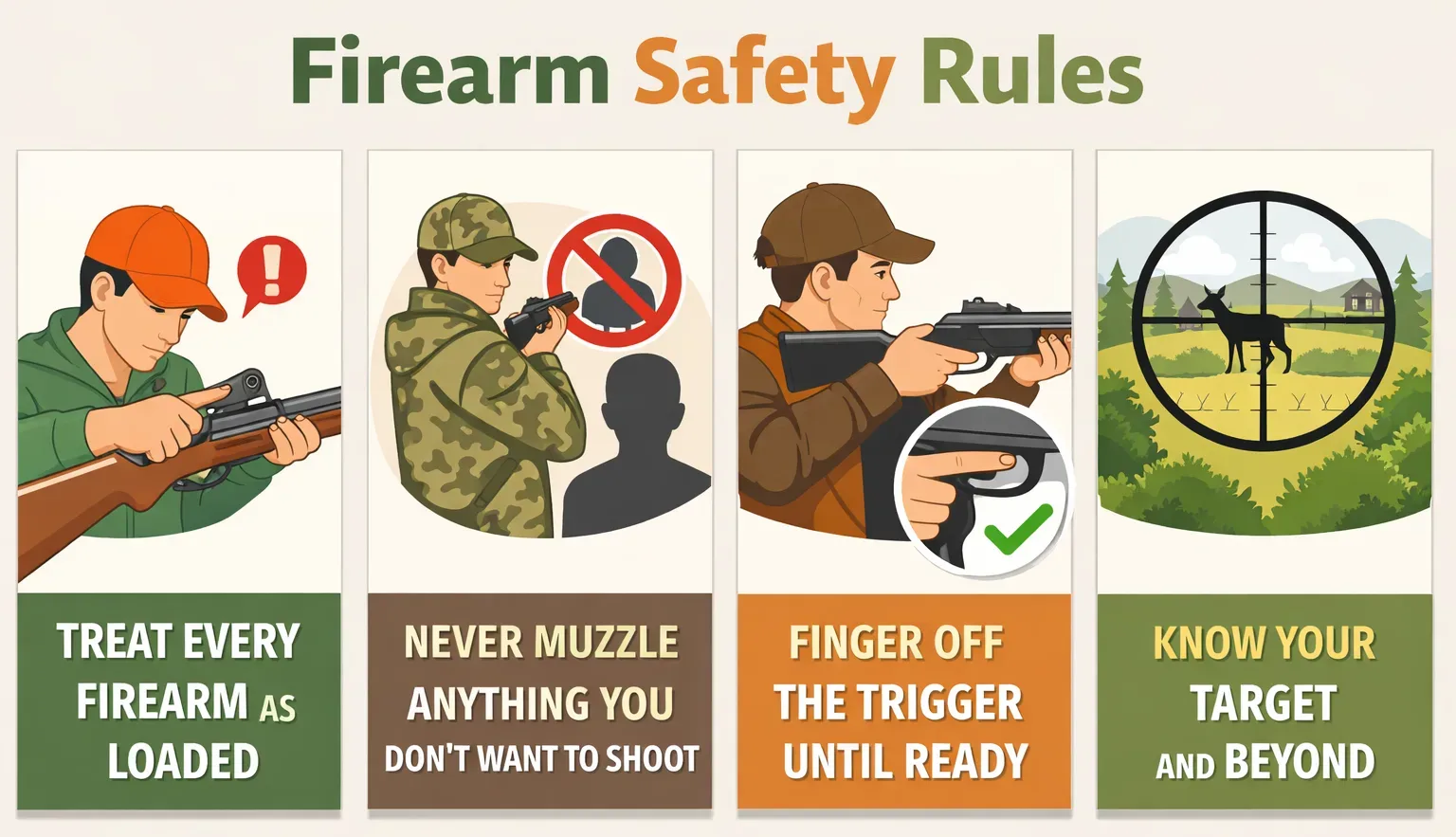
Before your kid ever sets foot on hunting ground, these four rules need to be drilled in.
Treat every firearm as if it is loaded, always. Never point a weapon at anything you are not prepared to shoot.
Keep your finger outside the trigger guard until you are on target and ready to fire. Know what is beyond your target before you pull the trigger.
These are not suggestions. They are the foundation of everything, and kids are actually really good at memorizing and following rules when you explain the why behind them, not just the what.
Gear wise, a properly fitted blaze orange vest is non-negotiable during firearm seasons. Most states require hunters to wear hunter orange, especially during firearm season. Even if no requirement, it is always recommended to wear it for safety.
Additionally, it’s essential to bring hearing protection that fits their smaller ears, as standard adult earplugs often do not seal correctly on kids.
Mistakes That Kill Kids’ Interest in Hunting
Staying Way Too Long
This is the big one. Parents do it all the time because they are in hunting mode, and they are having a great sit, and they just want thirty more minutes.
Meanwhile, the kid has been mentally checked out for an hour and is now cold and bored and building a genuine negative association with the whole experience.
Leave while they are still having fun, end the trip before they are ready to end it, and they will ask you when you are going again. Push past the point of enjoyment, and you will be dragging them out next time.
Focus Too Much on Harvest
If your kid thinks that a hunt where nothing got shot was a failure, that is on how you framed it.
Hunting is not a guaranteed grocery run. Even experienced hunters go home empty-handed constantly.
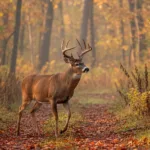
White-tailed deer hunting in the United States has a roughly 30 to 40 percent success rate, depending on the state. That means more than half of all hunters go home without a deer.
Celebrate the small stuff loudly. Such as, a button buck that walked through at forty yards and never gave a shot; a turkey that gobbled from across the field, or watching a red-tailed hawk take a mouse in the meadow.
These moments are the actual substance of hunting and kids need to understand that from the very beginning.
Being Rigid About Silence and Stillness
Kids cannot sit completely still for two hours. That is just biology. Their bodies are not built for the way adults who have been hunting for twenty years have conditioned themselves.
If you spend the whole morning tensing up every time they shift in their seat, you are going to wear yourself out and stress them out and nobody is going to have a good time.
Move around more, be truly patient, speak softly, and avoid glaring. It is better to hunt in a ground blind, as they allow for more freedom of movement.

When Are Kids Ready for Their First Real Hunt?
Legal Age Requirements
Most states have youth hunting licenses, but the age requirements and rules around them are all over the place.
In Texas, youth hunters between 9 and 16 can get a free youth hunting license. Pennsylvania has a Mentored Youth Hunter Program that allows kids as young as 7 to hunt small game if they are within arm’s reach of a licensed adult mentor.
Michigan has a similar mentored hunting program with essentially no minimum age, though common sense applies. Colorado lets kids as young as 10 apply for big game tags under mentored programs.
Check your state fish and wildlife agency website for the exact rules in your state before you make any plans. The youth hunt regulations change more often than you would expect.
Signs They Are Actually Ready
Beyond the legal side, look for these things:
- Start asking questions about firearms and how they work beyond just “can I shoot it.”
- Want to know about scouting, season dates, and what different animal signs mean.
- Can sit and focus for a meaningful stretch without needing constant input.
And most importantly, they are the ones bringing up hunting, not you. When those things are happening, they are ready.
Youth Hunting Programs Are Worth It
Most states require hunter education before a young hunter can get their first license, and these programs are genuinely good and useful.
They cover firearm and archery safety, wildlife identification for your specific region, hunting ethics, conservation history, and basic survival skills.
Many programs include a field day. During it, students practice outdoors with instructors. These instructors have done this for decades. They genuinely love introducing young people to it.
Find a program through your state wildlife agency website or through the National Shooting Sports Foundation’s course finder. Most of these programs are free or close to it.
Quick Answers to Questions Parents Always Ask
What age should kids start hunting?
Is it safe to take young kids hunting?
How long should the first trip be?
What animals are best for beginners?
Do kids need hunter education?
What gear do kids actually need?
The Real Point of All of This
The goal is not to produce a hunter by age twelve. It is to give your kid enough good mornings in the woods that they grow up feeling connected to the natural world in a real and meaningful way.
Some of those kids will hunt for the rest of their lives. Some will grow up to be conservationists who never pull a trigger but deeply understand and support why others do. Both outcomes are worth everything you put into them.
Start slow. Keep it fun. Pay attention to when they are done, even before they say it. And celebrate everything that happens out there, shot or no shot. That is genuinely all there is to it.
Not a hunter, but still want to take your children to enjoy the outdoors? No worries, check out this: Youth Hunting Tips For Parents Who Don’t Hunt.
Leave a Reply