
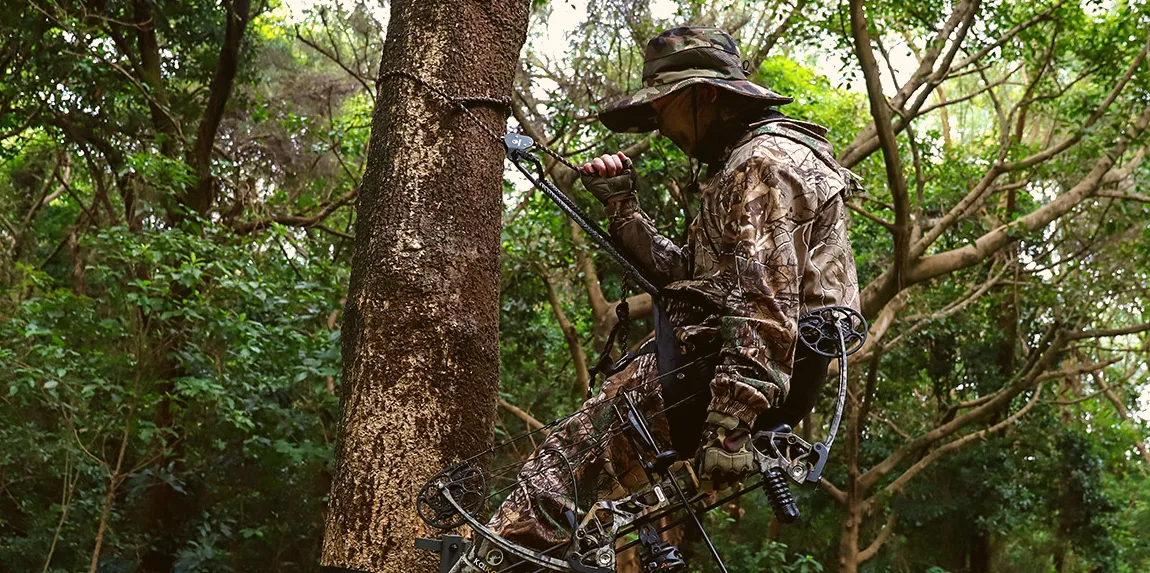
Saddle hunting has changed how modern hunters approach tree hunting. It has numerous variations, but one style is slowly becoming more popular – one-stick saddle hunting.
This is a climbing method that enables a hunter to climb and descend the tree with the help of a single climbing stick only. Although it needs practice and patience, the technique is highly valued due to its efficiency, portability, and lower equipment weight.
Do you ever wonder how hunters climb trees with a single stick? Or is one-stick hunting ever worth the trouble? This guide will explain. We will discuss what one-stick hunting is, how to do it, its benefits, and a step-by-step process to enable you to get into it safely and successfully.
What Is One Stick Hunting?
One-stick hunting is a tree hunting technique involving just one climbing stick with the help of a saddle hunting rig. Compared with the conventional climbing techniques, which entail using several sticks attached to the tree.
This technique consists of laying a single stick, climbing it, then tethering and pushing the stick up the tree repeatedly until the desired hunting height is achieved.
This system eliminates bulk and offers a lightweight overall and making extended hikes to hunting locations easier. Hunters carry only one climbing stick instead of four or five heavy ones. The method, however, requires expertise, concentration, and proficiency with climbing gear.
Why It’s Gaining Popularity Among Hunters
One-stick hunting is becoming more and more attractive to hunters due to three main reasons:
- Efficiency and mobility– With a single stick, fatigue on long hikes is minimized.
- Stealth advantage– Less clunky equipment means that it is easier to be quiet in the woods.
- Cost savings– It is less expensive to purchase one stick as opposed to investing in a complete set of sticks.
The one-stick climbing method is becoming an attractive solution to hunters who value minimalism and mobility.
One-Stick vs. Multiple Sticks Methods
Climbing techniques are highly important in the effectiveness, security, and comfort of saddle hunting.
The question of whether to use several sticks or the one-stick technique is a common debate among hunters, and each method has its own merits and shortcomings. You must know their differences before you decide on the right system to use in your hunts.
What Are The Differences?
Hunters use several sticks with three to five lightweight sticks, and fasten them in turn up the tree. One stick is a permanent step, which creates a kind of ladder until the hunter reaches the hunting height.
On the contrary, the one-stick technique just uses a single climbing stick. The hunters set up the stick and climb up, remove the stick and re-attach it to the tree, and continue climbing.
This is done until the desired height is attained. The greatest difference is the gear load, uphill pace, and physical exertion.
Pros and Cons of Multiple Sticks Method
| Pros | Cons |
|
|
Pros and Cons of the One-Stick Method
| Pros | Cons |
|
|
Why Hunters Still Choose the One-Stick Method?
Many hunters find this method complicated and time-consuming, especially older hunters or those who travel long distances. They often prefer the ease of using multiple lightweight sticks.
Although it is more difficult, one-sticking is still preferred by some hunters, as it gives maximum mobility.
One stick enables them to hike far and deep into the recreational territory without heavy loads. They like that one stick can double as a saddle platform, and it is also very flexible, and they can ascend trees that traditional ladder systems cannot.
Our experienced hunters have discovered that the method is effective and satisfying with practice, particularly in mobile, run-and-gun types of hunting.
Which Method Should You Choose?
Choosing the right climbing method depends on your personal preferences and needs. It is determined by terrain conditions, physical conditioning, climbing experience, and hunting style.
Beginner hunters who are more concerned about quick and stable setups may prefer using lightweight multiple sticks. This method allows for a simpler and faster arrangement, making it easier on the body and requiring less time to prepare.
One-stick method may be better when minimalist hunters need to be able to pack and are ready to practice.
Finally, the most suitable system would be the one that compromises between safety, efficiency, and personal hunting objectives.

How To One-Stick Saddle Hunting?
One stick climbing needs to be a systematized and well-planned process. The following is a step-by-step explanation that would enable beginners to understand how to do it.
Step-by-Step Instructions
Step 1: Preparation
Check out your gear before going out. Make sure that your climbing stick, lineman belt, tether rope, carabiners, and saddle are well-maintained. Load a rope or aider system where necessary to provide more climbing assistance. Learn at a lower level before attempting higher climbs.
Step 2: Selecting the Tree
Select a tree to suit your saddle hunting. Find a straight trunk with few branches to the height you are going to hunt. Never use slick-barked trees, and this can make the placement of sticks less stable.
Step 3: Initial Stick Placement
Attach the climbing stick to the lower part of the tree. Set it in place and make sure that it grasps the bark. Fasten your hands freely by adding the belt of your lineman.
Step 4: First Ascent
Get onto the climbing stick and continue to strain on the belt of your lineman. When you are steady, tie your tether to the tree over your head. This rope will be your lifeline on the climb.
Step 5: Advancing the Stick
As long as the tether is on you, get a little higher, then take the stick away. Put it back on again above where you are and make sure that it is secure. Repeat- climb, tether, move stick, until you have achieved your desired height.
Step 6: Setting Up at Hunting Height
When you are at hunting height, tie your tether where you want. Take out the stick in case you want the setup to be ultra-minimal, or keep it on to add stability. Get into your saddle and get ready to hunt.
Things Hunters Should Pay Attention To
- Consistency in Stick Placement– Always double-check that your stick grips the tree securely before climbing.
- Use Safety Gear– Always wear your Kalkal safety harness and use lineman’s ropes for added safety. When climbing, be tethered at all times to reduce the risk of falls.
- Body Positioning– Keep your center of gravity close to the tree to reduce strain.
- Noise Discipline– Metal-on-metal contact can spook game, so move quietly and carefully.
- Weather Conditions– Wet or icy trees can make climbing dangerous; avoid unsafe conditions. When buying climbing sticks, make sure to choose those with a high traction design on the steps.
One Stick Hunting Safety Checklist
Safety should always be your highest priority when practicing one-stick hunting. Here is a checklist to follow:
- Always wear a high-quality saddle and tether system.
- Use a lineman’s belt during all climbing stages.
- Double-check stick placement before stepping up.
- Carry a backup rope or aider in case of difficulty.
- Inspect gear for wear and tear before each hunt.
- Never rush—move slowly and deliberately.
- Practice controlled descents to avoid accidents.
Essential Gear for One Stick Saddle Hunting
A one-stick hunt needs good equipment to be successful and safe. The essentials include:
- Climbing Stick
Light, strong, and powerful to adjust. Most hunters would choose the aluminum or the carbon fiber designs. Find sticks that have locking cam-buckle systems, which form a strong grip on trees and reduce undesirable movement.
- Aider System
Rope loops or webbing to the stick so the stick can be more easily climbed. Multiple-step aiders are more efficient, as they enable hunters to achieve more height without carrying heavier equipment.
- Hunting Saddle
Gives comfort and freedom when hanging in the air at a hunting level. New hunting saddles have adjustable straps and padded support, which means that you will have less fatigue when sitting in the tree longer.
- Tether Rope
A carabiner and a friction hitch have fastened on your lifeline. Use climbing ropes that have a climbing safety rating, and check them regularly for whether it is torn or damaged.
- Lineman’s Belt
Hold you still when you fiddle with your stick. The belt allows the hands to be repositioned with gear and ensures that the person stays in touch with the tree, which reduces risk.
- Carabiners
Climbing-rated locking models are important in connecting ropes. Install screw-gate or auto-locking designs, so that there is certainty that the attachments will not come out of place easily.
- Platform
An additional small foot platform to provide greater comfort at hunting height. The use of a lightweight and compact platform enhances the level of stability and allows one to get more angles and balance when standing in the saddle.
Common Problems When Using One Stick
One-stick saddle hunting can be a challenge even when one practices it. Climbing will be more efficient as common problems and their solutions are known.
- Stick Slippage: In case you have a stick sliding, reload it on a coarser piece of bark or tighten the knot. Strap tension and positioning should always be checked. And the grip of the sticks is tested, then you commit your weight.
- Difficulty Climbing with Aider: Initially, use short loops until you feel confident. You need to add aider length gradually with practice, maintaining the same foot placement and balance with every climb.
- Excessive Noise: Tape metallic parts with stealth strips or tape to reduce noise. Learn how to move something slowly, not to bang the gear together, and put everything in place to limit the amount of noise.
- Fatigue: Train short, steep climbs to develop stamina and then do long hunts. Pay attention to good form, consistent running, and regulated breathing as a way of saving energy and enhancing overall endurance.
- Rope Management Issues: Have a rope bag (or carabiner system) to store ropes in an untangled condition. Check rope condition and wind coils and tie ends to avoid harmful snags when climbing.
Safe Climbing Inspections
You need a correct installation and method to use hunting sticks in the field safely. The most common cause of hunting accidents is falls from tree stands and climbing systems.
Every hunter can easily reduce the risks with a proper setup:
1. Choosing the Right Tree – Select a straight tree with healthy bark and dead branches that are not loose. The diameter of the tree must be between the recommended range of your climbing sticks, normally 6 – 20 inches.
2. Securing the First Stick – Beginning at the ground level, the first stick can be attached approximately 18 inches above the ground. Make sure that the strap or rope is completely tightened and the stick does not move.
3. Testing Stability – Push downwards before climbing to ensure that the stick is stuck in place. Free sticks lead to slipping, which is among the most widespread ineptitudes of hunters.
4. Attaching Safety Gear–A complete body safety harness must be put on and hooked to a lifeline during climbing. This makes sure you are not in danger of slipping. And a Lineman’s belt will ensure that you are secured as you join and fit sticks. This gives the ability to move hands-free and avoid falls in the setup.
Practicing and Training Recommendations
One-stick saddle hunting is a skill that one has to practice and wait for. Correct training will assist you in gaining confidence, increasing efficiency, and providing maximum safety during climbing.
1. Start Low
Climb a few feet off the ground until you have mastered the process. It is better to keep close to the ground as the risk is minimized, and any errors made in the early training process can be a good lesson in life rather than a serious accident.
2. Repetition Builds Confidence
The higher you ascend, the more natural the system will be. Training enhances muscle memory, improves coordination, and makes each movement smoother. It also enables you to concentrate wholly on hunting, rather than on the struggle to climb.
3. Simulate Hunt Conditions
Exercise with your pack and your bow. Training in conditions used during hunting also conditions your body for the actual hunting. Where your climbing style will not be affected by the extra weight of your gear.
4. Film Yourself
A list of climbs can be used to detect mistakes in body posture or the placement of sticks. Watching videos gives you a fair assessment and details on small errors that you can improve, and gives you a chance to constantly work on your technique.
5. Join a Community
People have numerous groups and forums online that can be useful in terms of tips and feedback. Meeting other hunters will help you learn faster, introduce you to time-tested tactics, and also serve as motivation when you feel like you are making slow progress.
Conclusion
One-stick saddle hunting is not a simple trend at all. It is a technique that brings prizes to hard work and ability. It is not easy, but it offers unparalleled mobility, efficiency, and low cost to any hunter who is prepared to learn it.
Hunters would be able to reach further places, go where others cannot, and climb trees for higher and better view for watching wildlife, just by carrying one climbing stick.
When you plan to go one-stick hunting, you should practice at the harmless levels, invest in good equipment, and take the time to learn how to climb properly. This is a technique that can turn out to be one of the most gratifying in your hunting pad with patience and training.

Leave a Reply