
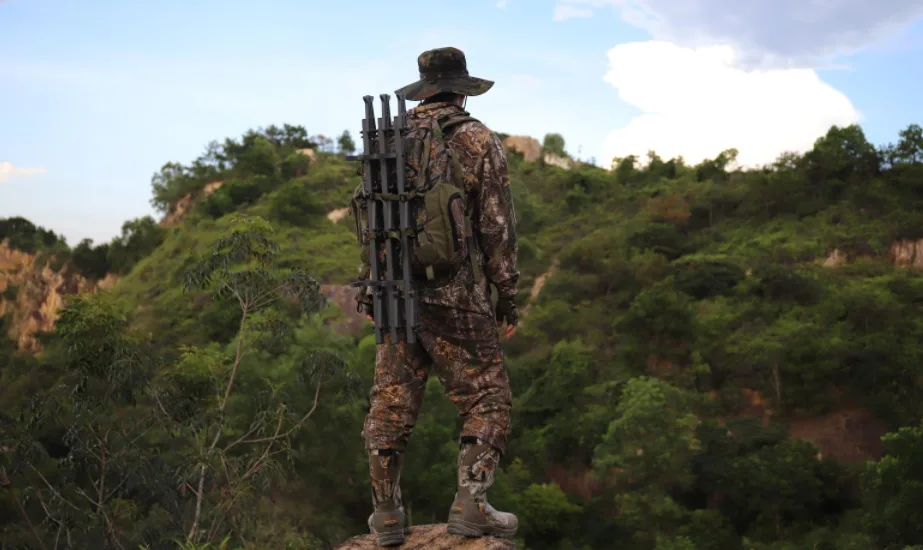
One of the most effective methods of hunting the whitetails is the tree stand method. Hunters use climbing systems to achieve an ideal and secure height so that they can strategically position themselves to attack. Climbing sticks have emerged as the most reliable among these for many outdoorsmen.
They are lightweight, secure, and effective equipment that enables hunters to climb trees with a small amount of effort. Having no idea how to use climbing sticks and how to install them correctly, the following guide will reveal it all.
Whether it involves selecting the appropriate stick design or climbing strategies and safety measures, you will see useful tips that will help make your hunts effective and safe.
What Are Hunting Climbing Sticks?
Climbing sticks are ladder-type products that hunters use to climb trees. They are light, portable, and constructed to fit on tree stands or saddles.
Normally, each stick is supplied with steps that are attached to a vertical post, and the sticks are also provided with straps to hold them to a tree.
Hunters like to use climbing sticks because they offer fast access to high hunting spots. Getting up to hunting height is more visible, easier to control the scent, and offers greater protection against disturbances at ground level.
Using the climbing sticks, you can make a stand in different trees as opposed to using permanent ladders.
Climbing sticks are better than screw-in steps in a number of ways. Screw in steps are known to harm trees, particularly on public land where they are usually illegal. They are also harder to install and noisier to install.
On the flipside, climbing sticks are fixed using straps and can be taken down without damaging the tree. This renders them more flexible, ethical, and acceptable among hunters in various areas.
Types of Climbing Sticks
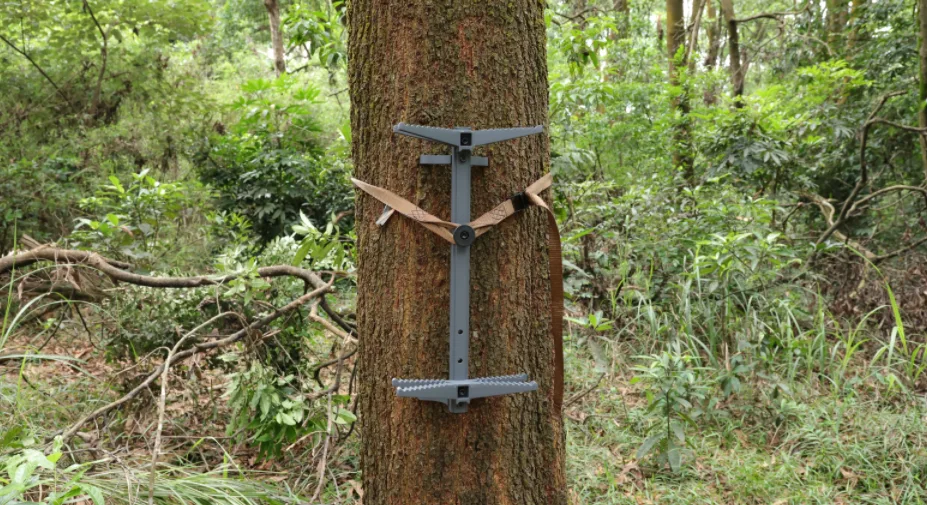
There are different types of climbing sticks that hunters can take, with each being structured with their own benefits. Your type of hunting, the type of terrain, and also the portability should determine the right design.
1. Ladder Climbing Sticks
Ladder climbing sticks are similar to a normal ladder and give constant steps on the ground upwards. They tend to be crafted out of steel or aluminum and are extremely stable.
Ladder sticks are best suited to hunters who want a solid footing and wish to climb fast. They are, however, heavier, bulky, and longer than normal stick, thus not as convenient to carry with mobile hunters.
2. Folding-Step Sticks
Folding-step sticks have steps that fold back against the stick when packed. This structure will ensure that they are small and not cumbersome to carry around in the forest.
Folding-step sticks are more attractive to many mobile hunters as they offer a compromise between portability and stability. They are lightweight and can be packed, thus making them useful in saddle hunting and pack-and-hunt arrangements.
3. Fixed Step Sticks
Fixed step sticks are equipped with permanent steps built or attached to both sides of the stick by welding. They are also reputed to be reliable in that there are no moving components that can go wrong.
They have good grips and large stepping platforms, which make climbing easier. The disadvantage is that they might not fold down as thin as step sticks that are folded. Nevertheless, they are the favorites of hunters who value durability and stability.
Climbing Stick Features to Consider
In selecting climbing sticks to be used during hunting, some characteristics define comfort, safety, and efficiency. This information will be useful in enabling you to choose the most appropriate one to suit your needs.
- Material: Aluminum sticks are light in weight and rust-resistant, and are good when used in mobile setups. Steel sticks are also heavy yet long-lasting. Carbon fiber solutions are high-end products that have unbeatable strength-to-weight ratios.
- Weight: In cases where hunters have to travel a long distance, lightweight sticks help to reduce fatigue on the way. But the heavier sticks tend to be more stable in climbing.
- Step Width and Foot Space: Large steps are more comfortable and suitable for hunters with big feet and big boots. Even a small footstep will lead to pain or falling when hunting in cold weather.
- Height Per Stick: On average, each stick offers 18-24 inches of climbing height. The number of sticks you can have is determined by the height you wish to have your stand.
- Strapping System: The vast majority of sticks have cam-buckle straps or ropes to keep them attached to the tree. The cam-buckle straps are fast but a little noisier than the ropes, which are quieter and smaller.
- Packability: Nesting or folding sticks are necessary in areas where hunters need to travel a lot. They lighten the weight and help to walk a long distance in dense cover.
- Grip Texture: The grips of some sticks are painted with a non-slip substance or have aggressive treads to make them safer to climb. This is particularly necessary when trees are moist or icy.
Common Mistakes With Using Climbing Sticks
Hunters are likely to commit some mistakes when installing climbing sticks, and in the initial stages. These traps can be avoided to enhance your safety and efficiency.
1. Incorrect Strap Tightening
Loose straps have the effect of shifting the stick when pressure is applied and can cause sudden slips. Afterwards, always check the straps by pulling. A stick that is well fastened ought not to shake when it is loaded.
2. Over-Spaced Steps
Spacing climbing sticks more than necessary will cause unnatural stretching of the body, which can lead to loss of balance. This is an error that usually occurs in haste. Spacing of steps should be in a natural, comfortable climbing rhythm.
3. Ignoring Tree Condition
The addition of sticks to unhealthy, unstable, or soft-barked trees undermines their stability. Always inspect trees first. Purchase healthy trunks that are straight and with a firm bark that firmly holds straps when climbing.
4. Skipping Safety Gear
The safety of the hunters is undervalued by many hunters. A single unguarded slip has the potential to be very damaging. Wear safety gear all the way to the ground.
5. Rushing Setup
Rushing in the setting of sticks can be very noisy and erroneous. Deer are very sensitive to metal clanks and movement. Go slow, keep silent, and ensure all the sticks are clear before climbing.
6. Improper Packing
Badly piled or loosely fixed climbing sticks shake with a hike and create an alert to deer. Pack sticks tightly with bungee cords or straps to ensure the movement is quiet in thick woods.
How to Use Climbing Sticks Correctly?
It is safe and efficient to learn how to use tree climbing sticks. These are the best steps to follow when using a climbing stick.
- Prepare Your Gear – Before climbing, place your sticks, safety harness, tether rope, and lineman belt.
- Set the First Stick – Install the first stick roughly shin high to make it easier to mount. Make it tight with the strap and test the balance by stepping on it.
- Climb and Add Sticks – As long as you are attached to the belt of your lineman, climb onto the first stick. The second stick should be placed at a comfortable step above, then tighten and secure. Then carry on repeating this until you have attained your preferred hunting height.
- Attach Hunting Platform or Stand – As soon as you are in place, install your saddle platform or hang-on stand. Remain tethered during the entire setup process.
- Final Safety Check – Check all the sticks with some weights to make sure they are safe before really investing in them. Re-tighten straps when you find some movement.
Check the video on how to tie your sticks to the tree:
Safety Accessories to Use With Climbing Sticks
- Full-Body Safety Harness: The best protection gear you should have during climbing is a full-body safety harness. It fastens your shoulders, chest, and legs, unlike the waist belts. This balances the impact of falls and lessens the risk of injury, and builds confidence when being out of the game.
- Lineman’s Belt: The belt of the lineman enables the hunters to remain attached when attaching or removing climbing sticks. It does not hold one hand and the other, making it dangerous to slip. It is valued as the silent, stable, and efficient setup of many hunters.
- Tether Rope and Carabiners: Tether rope and carabiners are used to keep hunters connected to the tree throughout the climb. A stick may slip, but you are still secure. Climbing-rated carabiners are always a better choice since they are much more durable and reliable in the field.
- Aider Systems: Aider systems are rope or webbing loops, portable in weight, and provide additional climbing steps. They will decrease the amount of sticks you have to carry and make your setup more mobile and efficient without compromising safety. Some hunters prefer one stick hunting with the help of an aider as the first step.
Safety Tips For Climbing
Hurrying is likely to cause skating or loss of footing. Going slow will make sure that all steps are safe. Intentional climbing also lessens noise, and the deer in the area will never know you are there.
- Avoid carrying heavy gear while climbing; use a pull-up rope once secured.
Gearing up and climbing with gear in hand will interfere with balance and fall risk. The haul line or pull-up rope allows both hands to be free, making the climbing a less hazardous and more controlled process.
- Inspect sticks, straps, and harnesses for wear before every hunting season.
Materials are weakened by sunlight, moisture, and constant use. Often, cracks, frayed straps, or loose bolts can be detected at an early stage due to regular inspections. The replacement of damaged equipment will guarantee the durability and eliminate accidents during the season.
- Practice climbing in daylight before attempting nighttime or early-morning setups.
Darkness is a challenge and a pressure, especially to beginners. Training in the daytime develops confidence and muscle memory. Being used to the procedure, early-morning or evening ascent becomes a lot more comfortable and safer.
How Many Climbing Sticks Do You Need?
The number of sticks needed is dependent on your desired height for hunting and what suits you. Most hunters seek an elevation of 15 to 20 feet, usually achieved by using 3 to 4 climbing sticks.
Assuming that each stick fills approximately 20 inches, a four-stick sample will, on average, be at standard height. Nonetheless, aider system hunters can climb higher using fewer sticks.
To decrease the weight, mobile saddle hunters are accustomed to carrying one or two sticks with aider. Standing hunters can use four or more sticks to be much more stable and easier to climb.
The correct number will in the end be determined by how comfortable you are with climbing, your physical capability, and the style of hunting.
Conclusion
One of the surest aids to attaining safe hunting heights is climbing sticks. They are portable, versatile, and secure in comparison to screw-in steps or permanent ladders.
By learning the various kinds of climbing sticks, selecting the appropriate features, and mastering the safe climbing skills, you can make the most of the comfort and efficiency during hunts.
Also, it is important to remember that the correct climbing stick setups are as crucial as the hunt itself. Make sure to keep safety gear and straps tight and climb slowly. When properly prepared, you will be able to hunt smarter, safer, and more successfully with the help of climbing sticks.
Leave a Reply