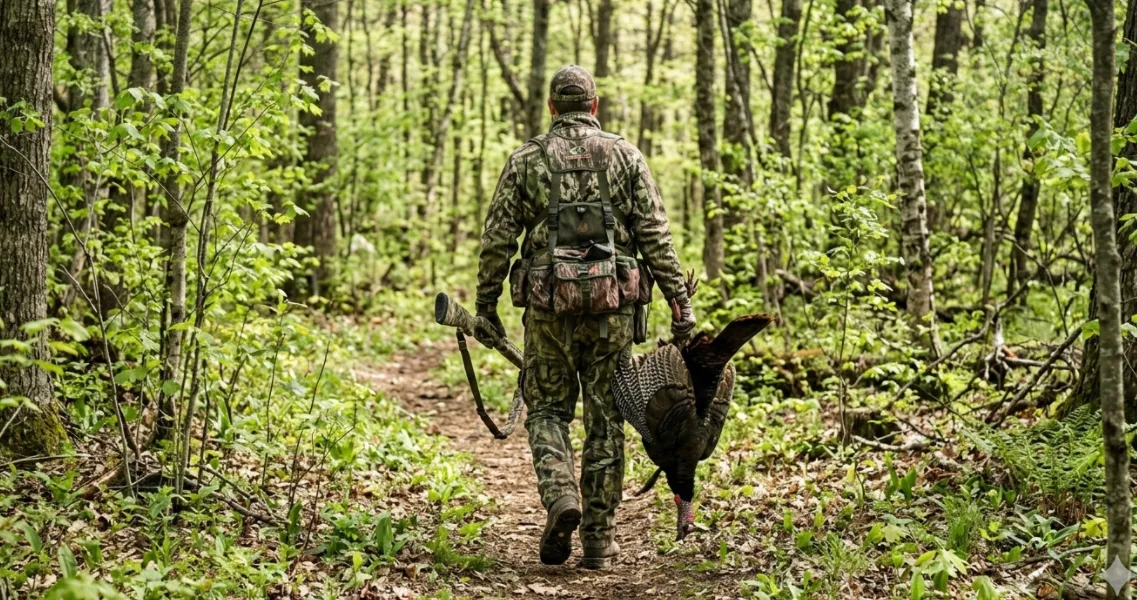
When turkey hunting, overpacking feels like full preparation, but it is not. Your turkey vest should be mission control that adapts to real hunting situations.
It’s like a lightweight, scenario-driven system that helps you pack with purpose: what to carry, why it matters, and where to put it so you can react fast when a gobbler shows up.
Here, for each scenario, we’ll show you what high-value items to pack in your turkey vest, what to leave behind, and how to organize them in your vest for silent, one-hand access. Our goal is to pack smarter, move lighter, and shoot cleaner.
Core Essentials You Must Bring to The Field
Before we get into strategy stuff, there is a baseline. A no-excuses kit that goes in the vest no matter what.
Ground blind or run-and-gun. Opening day or the last morning of the season. These items come with you every single time.
1. Hunting Tools
Your primary call is the centerpiece of the whole operation. Pick the one that matches your skill level and the conditions you are hunting.
Diaphragm calls are hands-free and quiet to handle, which is huge when a bird is close. Slate calls give you a ton of tonal range and are great for softer, more realistic sounds. Box calls cut through wind and distance like nothing else.
A backup call is not optional, even though most hunters treat it that way. Calls break. Strikers crack. Mouth calls tear right when a gobbler is 80 yards out and working. A backup is what keeps a bad moment from becoming a blown hunt.
Carry your striker if you run a slate, and make sure it actually matches the call surface. Different strikers make dramatically different sounds on the same call.
Your shells or arrows are obvious, but the amount you carry matters more than you think. More on that in a bit.
And your license and turkey tags should always go in the vest, not the truck. Or you are considered to actually hunt illegally without any of these.
2. Navigation and Safety
A GPS or mapping app loaded with your spots before you leave home is non-negotiable. A headlamp with fresh batteries handles the pre-dawn walk-in without any drama.
Blaze orange is legally required in a lot of states during the spring season, so check your regulations and carry it if needed.
And a small first aid kit takes up almost zero space. Blisters, cuts, and thorns to the face. Things happen.
3. Situational Basics
A Thermacell is genuinely worth its weight in early season when the bugs are aggressive. If you have ever tried to sit still and call while mosquitoes mob your face and neck, you already know this.
Face masks and gloves are not optional either. Turkeys have exceptional eyesight, and any exposed skin that moves is going to end your hunt before it starts.
Pack With Your Hunting Style
Here is where most hunters go sideways. They pack the same vest for every single hunt, regardless of what they are actually doing.
That makes zero sense. A ground blind setup and a run-and-gun setup are completely different situations, and your kit should reflect that.
For Ground Blind Hunting
Ground blind hunting is patient, positional hunting. Because you are stationary most of the morning, you can afford to bring more gear without it costing you.
- More decoys make sense here. A hen and a jake combo in front of the blind gives an approaching gobbler something visual to commit to. The bird is looking for a reason to close that final gap, and a decoy spread gives him one. Since you are not hauling them across miles of hardwoods, weight is not the same issue it would be otherwise.
- Extra shells are reasonable when you are parked in a blind. You are not carrying them on your back through steep timber, so a few extra rounds in a side pocket is low cost.
- Rain gear is worth bringing if you are planning a long sit. Sitting wet and cold makes people fidget, make noise, and leave early. A packable rain jacket in the back pouch handles that problem before it starts.
Seat comfort matters less here because you already have a chair or cushion set up inside the blind. The vest is mostly managing your call kit and safety gear at that point.
For Run-and-Gun Hunting
This is a completely different game. You are covering ground, locating birds, repositioning fast, and setting up in new spots multiple times in a single morning.
Every extra pound matters because you are carrying it through timber, briars, and whatever else is between you and the next gobbler.
- Skip the heavy decoy spread. A single lightweight foam hen is the most you want. Carrying a full setup while moving fast through the woods ruins your speed and makes more noise than a bird will tolerate.
- Locator calls are your priority. Crow calls, owl hooters, and coyote howlers help you find gobbling birds without burning your turkey calls early in the morning. Get them to shock gobble, pin their location, and close the distance.
- Keep your call setup tight. One diaphragm working, one box or slate in an easy-access pocket. That is the kit. You do not need five calls when speed and mobility are what are actually getting you birds.
Quick Comparison
| Hunting Style | Pack More Of | Pack Less Of | Priority |
| Ground Blind | Decoys, extra shells, rain gear | Locator calls, extra clothing | Patience and decoy placement |
| Run-and-Gun | Locator calls, compact call kit | Decoys, extra shells, bulky gear | Speed and quiet movement |
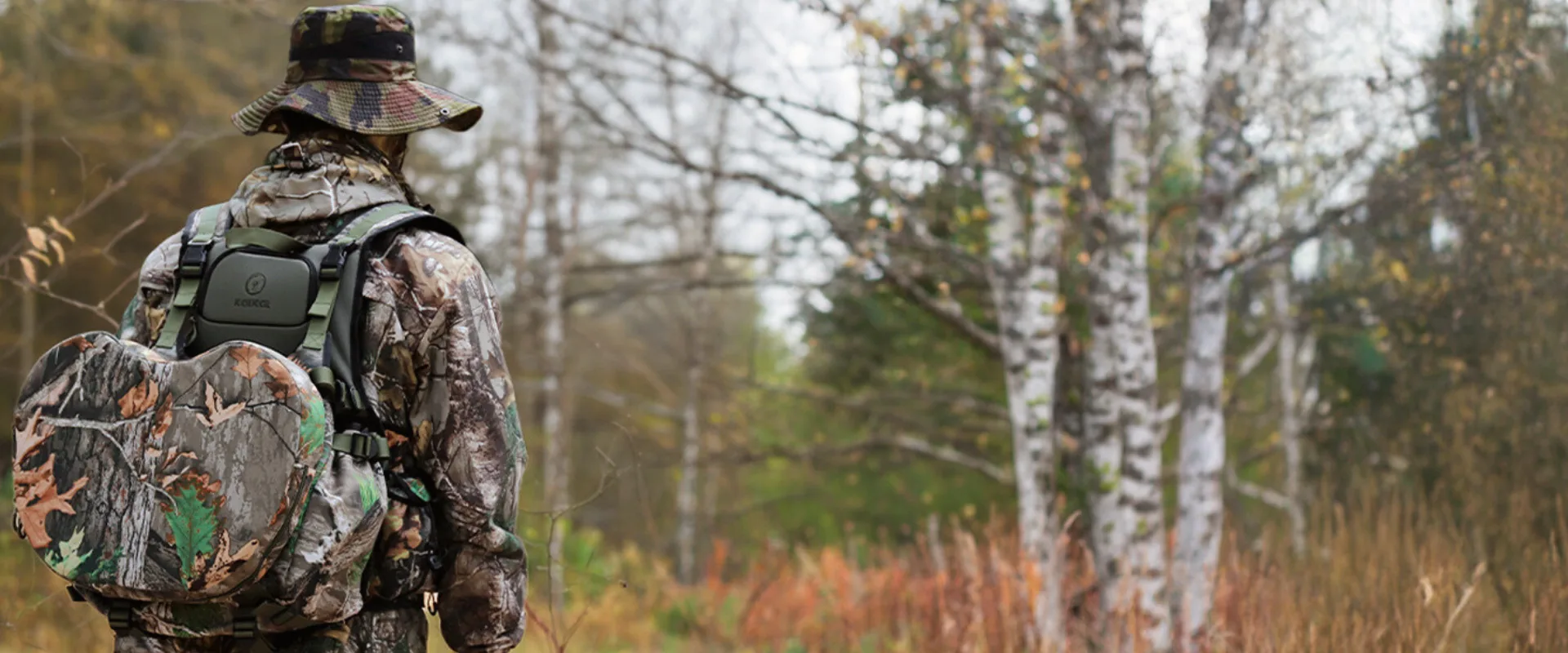
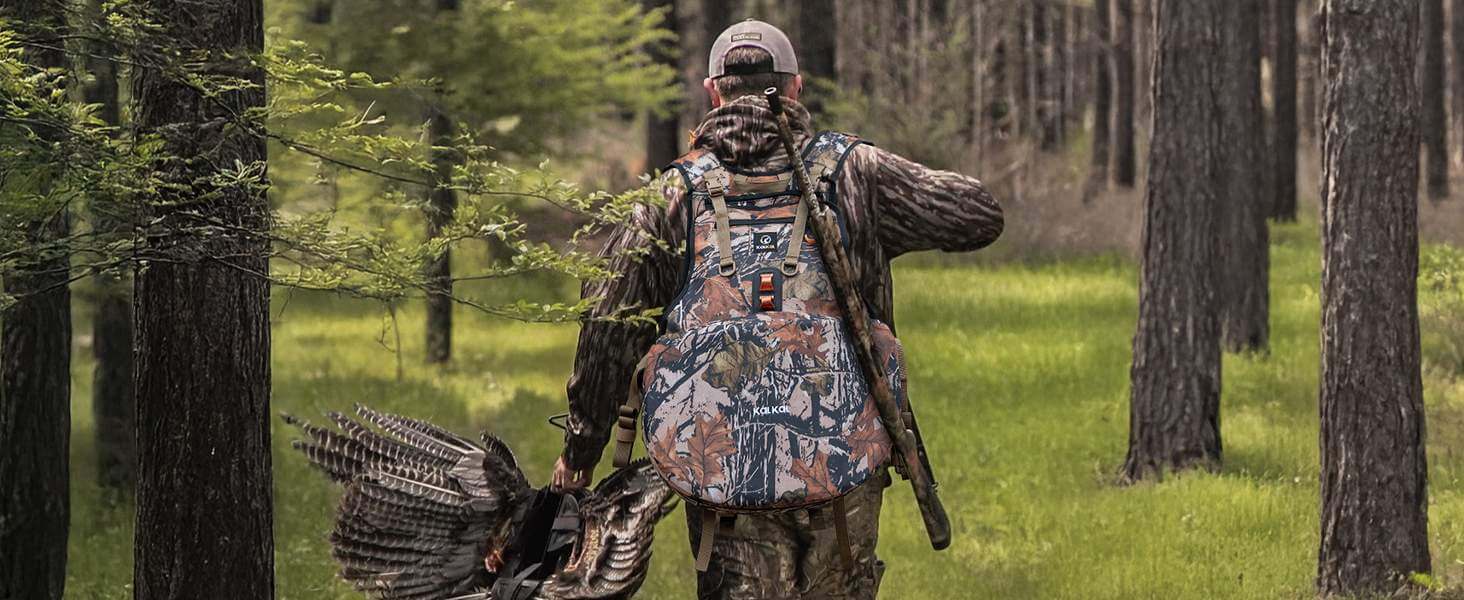
To bring all your necessary gear, you can try the Kalkal turkey vest with seat or the pack-style turkey vest. They all have enough space for storing all your gear, allowing easy access with one hand.
Early Season vs Late Season Adjustments
Your vest should shift as the season shifts. Not a total overhaul, but a few smart swaps.
Early Season Gear
Birds have not heard much yet. They are still grouped in winter, vocal, and willing to work decoys aggressively. This is when bigger setups and louder calling pay off.
Bring the full decoy kit. Do not be afraid to be assertive with your calls. Cold mornings also mean you need layers, warm gloves, and probably a Thermacell because the bugs are just waking up. You should pack these according to the season.
Late Season Gear
By now, those birds have seen everything. They have been called to, spooked multiple times, and educated by other hunters. At this time, your vest should get lighter, and your approach should get quieter.
Pull back on the decoys, especially strutting tom setups, because pressured birds treat those as red flags.
Swap to subtle calling tools, softer slates, and low-volume mouth calls. The hunters killing late-season birds are the ones whispering, not shouting.
What NOT to Pack in Your Turkey Vest
This section matters just as much as the gear list. Overpacking hurts you in two specific ways. It slows you down when you need to move, and it makes noise when you need silence. Both of those things cost you birds.
1. Too many calls
Three calls are the honest maximum most hunters ever need. A vest with six, seven, or eight calls is just eight things rattling around and eight things to dig through when a gobbler is 50 yards out and coming fast.
2. Overly aggressive decoy setups
A full-strut gobbler decoy can absolutely work, but it spooks as many birds as it attracts. Know when the setup fits the situation and leave it behind when it does not. Check out our proper turkey decoy setup guide.
3. Large unnecessary optics
Full-size binoculars are overkill for turkey hunting. You are working birds at close range in timber, not glassing hillsides for elk. A compact pair or none at all handles everything you need.
4. Excess shells
Six to ten shells cover nearly every realistic scenario you will face in the turkey woods. Twenty shells are just weight sitting in your vest loops with nowhere to go.
5. Bulky rain gear in warm weather
A packable rain layer that folds small is completely fine. A heavy waterproof bib stuffed into your vest on a 70-degree April morning is dead weight, taking up real estate you actually need.
6. Loud accessories
Metal zippers clinking, carabiners jangling, loose gear sliding around in half-empty pockets. Turkeys hear things you do not. If it makes noise when you shift your weight, it does not belong.
How to Organize Your Turkey Vest for Efficient Access
Having good gear means nothing if you are digging for it at the worst possible moment. Organization is what turns a good kit into a fast, functional system.
- Weight distribution should be even across both sides of the vest. Heavy items are low and centered, lighter items in upper pockets. A vest that pulls hard to one side is uncomfortable and messes with your movement when you are trying to stay still.
- Call pocket placement should put your most-used call in your most accessible spot. If you primarily run a box call, it lives in the large back pouch where you can grab it with one hand. Mouth calls go in a front chest pocket where you can access them without looking down or shifting position.
- Silent storage is an easy upgrade most hunters never bother with. Line hard call pockets with a small piece of fleece. Use soft zipper pulls instead of metal hardware. These little things make a real difference on a quiet morning when sound carries forever.
- Shell loop positioning should let you reload without fully repositioning your body. Chest-mounted loops are standard for a reason. Shoulder loops work too. The test is whether you can grab a shell and reload without standing up when you are sitting against a tree at full draw.
- Separate wet and dry storage matters more than it sounds. Wet rain gear shoved against your mouth calls are how calls go moldy, and mouth calls get ruined mid-season. A dedicated waterproof pocket keeps wet gear isolated from everything else.
- Access without looking down is the whole point of good vest organization. You should be able to reach every pocket, grab every call, and pull shells by feel and muscle memory alone. Practice at home before the season. Run through your kit. Know exactly where everything lives before you ever step into the woods at 4:30 am.
Conclusion
A smart turkey vest setup is not about having the most gear. It is about having the right gear for the way you actually hunt.
Your vest should support your hunting style, not slow it down. Before your next hunt, do this: empty the vest. Lay everything on a table. Look at it honestly, and you will probably find a few things that are not necessary.
Pack with a purpose, organize in a proper way, and move fast when you need to. That is the whole system right there.

Leave a Reply