
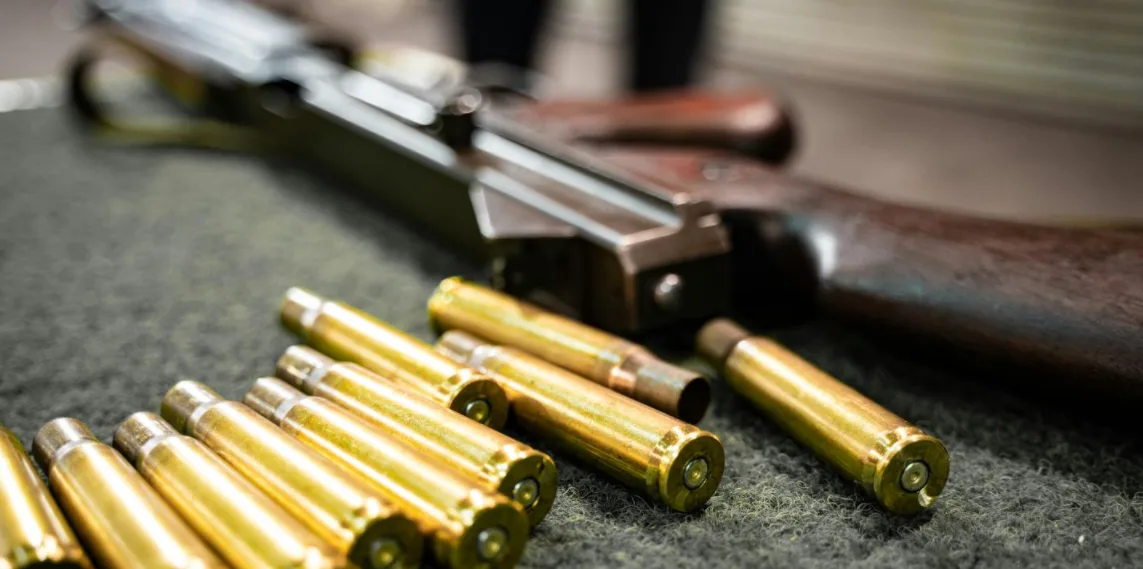
The selection of the appropriate caliber to hunt deer may or may not make or break your hunting. The wrong caliber may result in injured deer, wasted chances and lost suffering. It may seem like a straightforward subject, but it is one of the most contentious issues among hunters.
In this article, we will discuss what caliber is good to use when hunting deer, which ones should be avoided, and some of the myths that surround the use of caliber.
We will also address what calibers experienced hunters have suggested in order to achieve effective and humane results. This guide focuses on the technical aspects of calibers, which is a component of our Comprehensive Deer Hunting Guide.
Key Takeaway:
- Cartridge guns such as the .22 LR, .17 HMR, .204 Ruger, .30 Carbineand .223 Remington, they do not have the power and impact to cause a quick death in a humane way.
- You should use what works, such as the.243 Winchester, the.270 Winchester, the.308 Winchester, .30-06 Springfield or the 6.5 Creedmoor. They have been considered as being reliable, powerful, and precise in the deer woods.
What to Consider When Choosing Caliber for Deer
Any deer hunter would want to have a clean, ethical and quick shot. In order to do that, you will require ammunition that provides adequate energy, penetration and expansion.
However, it is unfortunate that not all cartridges in the market are made to do that. Certain calibers are simply outpowered or erratic with respect to hunting medium-sized animals such as deer.
So, it is essential to get to know what makes a caliber effective. It is not just the size of your bullet or the volume of your rifle.
1. Bullet Performance
In the case of deer hunting, a bullet should strike vital organs, and that will be a clean kill. That needs sufficient penetration and impact energy.
- Penetration determines how deeply the bullet travels after hitting the target.
- Velocity affects how fast the bullet moves and how it expands inside the deer.
- Energy (measured in foot-pounds) determines how much stopping power the bullet carries.
An excellent deer shooting caliber will produce approximately 1,000 foot-pounds of impact energy. Any less could hurt and not kill the deer.
The bullet may not expand when the caliber used is not violent or energetic. It may go through without inflicting sufficient internal damage, which results in an extended and terrifying death of the animal.
2. Bullet Construction
The design of the bullets is as important as the caliber. Deer bullets are to be soft-point, bonded, or controlled-expansion. These are made to enlarge on impact and inflict the greatest internal damage with sufficient penetration.
Lighter or hollow-point bullets, such as those used in varmint hunting, such as prairie dogs or coyotes, tend to break up on impact. That is unsafe since they do not strike the vital places of the deer.
3. Ethical Considerations
Ethical hunting rules are as important as accuracy. A weak caliber would ensure that the deer is wounded and not killed immediately. It is the duty of hunters to make sure that the shots they make are both effective and humane.
When a deer is wounded, it can run several miles before it dies, and it is painful and brutal to reclaim it. That is the reason why most states impose limits on the caliber and type of deer hunting.
4. Hunting Regulations and Restrictions
There are varying state laws on the calibers or types of ammunition that are legal to use for deer. A few jurisdictions prohibit rimfire cartridges, such as the.22 LR or .17 HMR due to insufficient power.
Never hunt without first examining your local regulations. Such laws are not red tape, but they are geared towards encouraging ethical kills and ensuring that populations of wild animals are not endangered.
5. Range and Accuracy
Lastly, consider your ordinary range of hunting. When hunting in the thick woods, most long-range calibers might be sufficient. However, with the open-country hunters, you will need a cartridge that stores energy and accuracy over a greater distance.
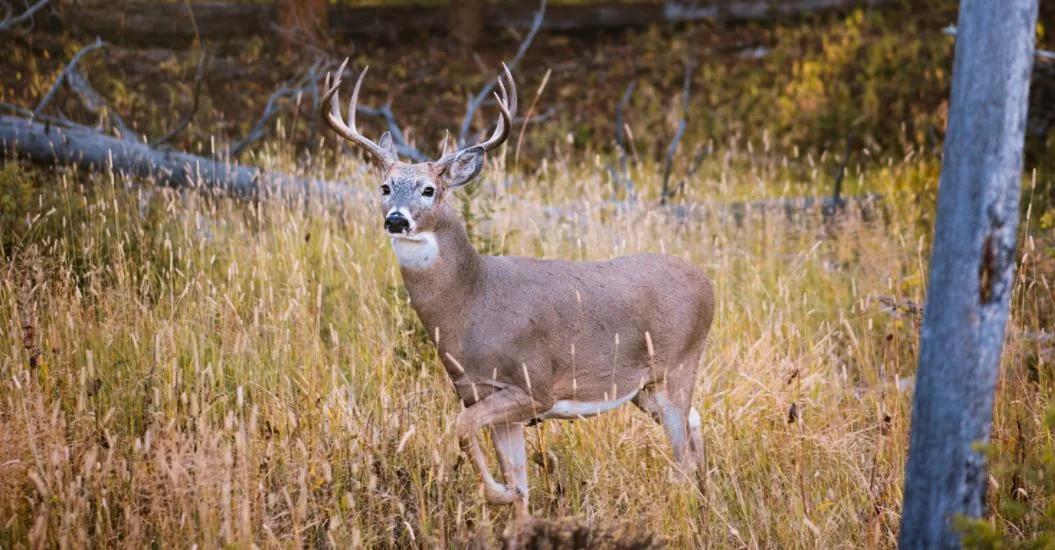
The Worst Deer Hunting Calibers
Next, we will talk about calibers that are usually misused in deer hunting. These may be fun when target shooting or hunting small game; however, they simply fail when trying to hunt a deer.
.22 Long Rifle (.22 LR)
.22 LR is, by far, one of the favorite cartridges in the world, but not in deer hunting. It is ideal in rabbits and squirrels or target practice, but is too weak to shoot in medium game.
The .22 LR only has a range of 100-150 foot-pounds of energy. That is in comparison to the 1,000+ needed to kill a deer, and you can see the issue. It does not penetrate, be it exponential, and frequently injures, but does not kill deer.
Although the position of the shot might be ideal, the bullet might not hit the vital organs. This is why it has been prohibited in deer hunting in almost all the states of the U.S.
.17 HMR
Another small-game favorite is the.17 Hornady Magnum Rimfire (HMR). It is very quick and precise, yet it launches a lightweight 17-20 gram bullet.
This implies low penetration and low stopping power. The bullet rips apart when it hits, and that is effective with varmints but not with animals with thick skins such as deer.
Although it may be true that a perfectly placed headshot will drop a deer, it remains immoral and ineffective. It is not worth the risks and pain it may bring.
.204 Ruger
The .204 Ruger is a flat-shooting, high-speed cartridge developed mainly for varmint hunting. It offers impressive velocity but fires a small-diameter bullet weighing between 32 and 45 grains.
The result? Explosive surface wounds and shallow penetration. The round simply doesn’t deliver enough energy for deer-sized game.
Some hunters argue that the .204 Ruger can kill a deer at short range, but that doesn’t make it ethical. It’s like using a fly swatter when you need a hammer — wrong tool for the job.
.223 Remington
There is a lot of controversy with this one. .223 Remington is mostly used against small predators such as coyotes or foxes. It is sometimes used by some hunters on deer; however, it is considered to be borderline at best.
Although it has the capability of producing between 1,200-1,300 foot-pounds of force with heavier ammunition. The majority of factory loads are target or varmint loads. These bullets are not hard and penetrating.
You can use bonded or controlled-expansion bullets in case you have to use a .223. However, there exist better, safer, and more ethical alternatives. For more, check this: Can you hunt deer with a 223?
.22-250 Remington
The other quick and precise cartridge is the .22-250 Remington, which also offers astonishing speed and light weight. The bullet is prone to excessive rapidity, which decreases the penetration in deer.
It is used by some hunters to hunt smaller species of deer, but not the larger whitetails or mule deer. It would be a varmint cartridge, but not a deer rifle round.
.30 Carbine
The .30 Carbine was initially designed as a military carbine in World War II. It is an entertaining cartridge to shoot the ranges, but when it comes to ethical deer killings, it does not have the energy required.
It has approximately 900-1,000 foot-pounds of muzzle energy, barely enough to hit even the deer-sized game on the minimum. And it also dissipates energy rapidly and can not be relied upon over a distance exceeding 100 yards.
In short, it is marginal to deer and must not be taken when there are other alternatives.
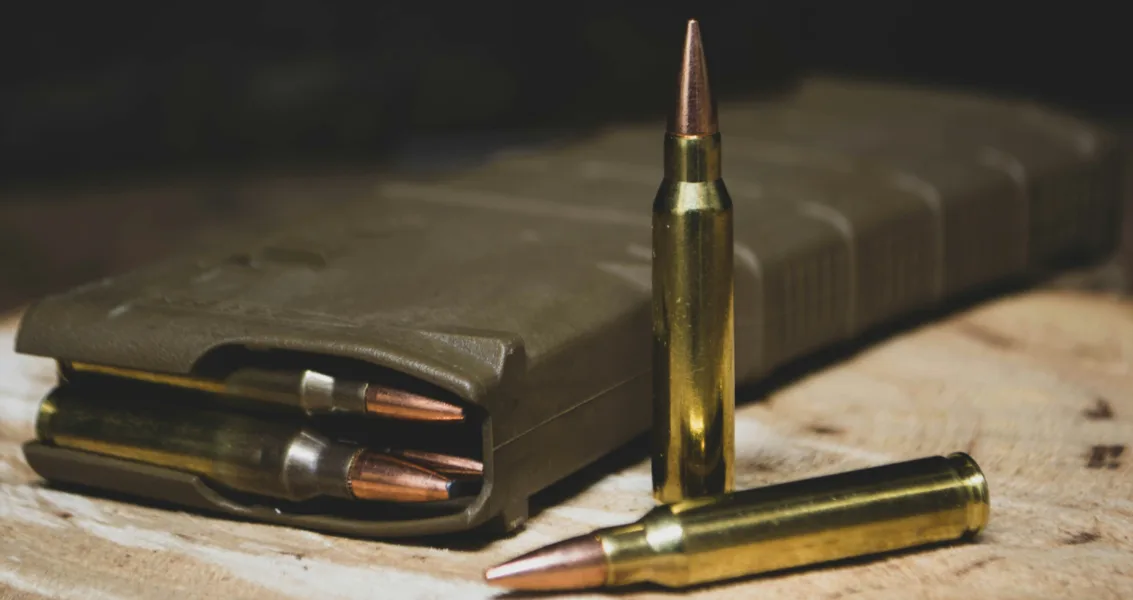
Common Myths About Caliber and Deer Hunting
Much of the misinformation exists on the hunting forums and campfires. Let’s clear up some common myths about calibers and deer hunting.
Myth 1: “Shot placement doesn’t matter if you use a bigger caliber.”
This is one of the biggest misconceptions. Even the most powerful rifle won’t compensate for poor aim.
A poorly placed shot with a .300 Win Mag can wound a deer just as easily as a bad shot from a .243. Shot placement always matters more than caliber size.
Myth 2: “Caliber doesn’t matter if you’re close enough.”
Distance helps with accuracy, but it doesn’t fix underpowered ammunition. Even at 30 yards, a .22 LR may not penetrate deep enough to reach vital organs.
Always use a cartridge designed for the game you’re hunting, regardless of the range.
Myth 3: “Any centerfire cartridge is fine for deer.”
Not true. While some small centerfires like the .223 Remington technically qualify, that doesn’t make them ideal.
Deer are tough animals, and even slight underperformance can lead to wounded or unrecovered game. Choose a cartridge with enough stopping power to ensure a quick, humane kill.
Myth 4: “High velocity equals humane kills.”
Velocity helps, but it’s not the only factor. A lightweight, high-velocity bullet might fragment too early and fail to penetrate deeply.
What matters most is a balanced combination of velocity, bullet weight, and construction.
Myth 5: “If the caliber can kill, it’s good enough.”
Technically, almost any bullet can kill a deer under perfect conditions. But ethical hunting isn’t about what “can” happen, it’s about what should happen.
You want consistent, humane kills that minimize suffering. That means using the right caliber, not just a “good enough” one.
What Caliber Is Best For Deer Hunting?
Now that we’ve covered the worst options, let’s look at calibers that have proven success among deer hunters.
These are reliable, widely used, and legal across most hunting states.
.243 Winchester
The .243 Winchester is one of the best beginner-friendly calibers for deer. It offers manageable recoil, flat trajectory, and solid energy for clean kills.
With proper bullets like the 95 or 100-grain soft points, it performs well even on larger whitetails.
.270 Winchester
The .270 Winchester is a timeless classic. It offers a near-perfect balance of velocity, energy, and trajectory.
Hunters love it because it delivers long-range accuracy with minimal recoil. It’s more than capable of taking down deer, elk, and even moose when used correctly.
.308 Winchester
A favorite among serious hunters, the .308 Winchester offers great versatility. It delivers around 2,600–2,800 foot-pounds of energy, enough for clean kills at various ranges.
It’s also easy to find, reliable, and widely supported with different bullet designs.
.30-06 Springfield
The .30-06 Springfield is one of the most respected calibers in deer hunting history. It’s powerful, accurate, and proven across decades of use.
It handles a variety of bullet weights, from 150 to 180 grains, making it versatile for different deer sizes and terrains.
6.5 Creedmoor
The 6.5 Creedmoor has gained massive popularity for its accuracy and mild recoil. Despite its modest recoil, it maintains impressive energy and penetration at long distances.
Rifle Caliber Chart: Match Ammo to Your Hunt
| Caliber | Bullet Weight (grains) | Effective Range (yards) | Best For |
| .17 HMR | 17–20 | 100 | Small game, varmints |
| .22 LR | 36–40 | 75 | Rabbits, squirrels, target shooting |
| .22-250 Rem. | 50–60 | 300+ | Coyotes, foxes, groundhogs |
| .223 Rem. / 5.56 NATO | 55–77 | 300+ | Predators, legal small deer |
| .243 Win. | 90–100 | 400 | Whitetail, pronghorn, mule deer |
| 6.5 Creedmoor | 120–143 | 500+ | Deer, black bear, elk (with premium bullets) |
| .25-06 Rem. | 100–120 | 500 | Deer, antelope |
| .270 Win. | 130–150 | 500 | Deer, elk, black bear |
| 7mm-08 Rem. | 120–150 | 500 | Deer, caribou, elk |
| .308 Win. | 150–180 | 500 | Deer, elk, moose |
| .30-06 Springfield | 150–200 | 600 | Elk, moose, black bear |
| .300 Win. Mag. | 165–200 | 700 | Elk, moose, large game at long range |
| .338 Win. Mag. | 200–250 | 700 | Moose, grizzly, large North American game |
| .45-70 Govt. | 300–405 | 200 | Close-range bear, hogs, brush country |
Conclusion
The selection of deer hunting caliber is not a simple matter of striking the target. By selecting the right ones, you not only will increase your chance of success but also show respect to the ethics and the spirit of true deer hunting.
Keep in mind that you are a hunter to respect the animal and harvest it clean. Always put into consideration bullet performance, energy, construction, and the local hunting laws before settling on your caliber.
Leave a Reply